12 August 2021

UK Innovation Strategy

Standard YouTube Licence


In his foreword to Global Britain in a competitive age which I discussed in NIPC Brexit on 19 March 2021, the Prime Minister wrote: "Our aim is to have secured our status as a Science and Tech Superpower by 2030." The Secretary of State for Business referred to that target in his foreword to UK Innovation Strategy Leading the future by creating itIn my article, I wrote:
"As an intellectual property lawyer, I should love to see the UK become a science and technology superpower with vibrant creative industries attracting investment and expertise from around the world.   I just can't see how it is going to happen,"

I read the UK Innovation Strategy very carefully in the hope that it would explain how the UK will become a science and tech superpower in 9 years.

Synopsis

The document is 116 pages long divided as follow:  

  • Secretary of State's Foreword (pages 4-5);
  • "At a glance":  a bulleted list of the steps that the government proposes to take (page 6);
  • "Introduction:  Why do we need an Innovation Strategy?":  a summary of the strategy (pages 7 - 10);
  • Part 1 "Innovation today" covering "What is innovation?", "Why is innovation important?", "The challenge: Innovation created the modern world, but progress is slowing" and "The opportunity: The UK is ideally placed to lead a renewed global spirit of innovation" (pages 11 to 17);
  • Part 2 " Innovation tomorrow" covering "Learning from the pandemic to create the world’s best innovation ecosystem", "Vision 2035: The UK as a global hub for innovation" and "Tracking progress towards our vision" (pages 18 - 21);
  • Part 3: "Achieving Vision 2035" covering "Pillar 1: Unleashing Business – We will fuel businesses who want to innovate", "Pillar 2: People – We will make the UK the most exciting place for innovation talent", "Pillar 3: Institutions & Places – We will ensure our research, development & innovation institutions serve the needs of businesses and places across the UK" and "Pillar 4: Missions & Technologies – We will stimulate innovation to tackle major challenges faced by the UK and the world and drive capability in key technologies! (pages 18 - 100);
  • Part 4: "Achieving our ambitions – implementation and next steps" (pages 101 - 107);
  • Annex A "Innovation institutions" (pages 108 - 113) and
  • Annex B: "List of Stakeholders Consulted" (pages 114 and 115).

Becoming a "Science and Rech Superpower" in Nine Years

The Introduction states on page 8:
"The Prime Minister has announced our intention to be a science superpower by 2030, placing science, innovation and technology at the heart of his vision for the UK. This involves being to science and technology what we are to finance: a central hub of the global economy, and the country that the world’s most innovative people and firms make their home."

Although there are signs that it has lost some business to Amsterdam, Dublin, Frankfurt, Madrid, Milan and Paris as a result of the UK's departure from the European Union, London remains one of the world's leading financial centres rivalled only by New York, Shanghai, Hong Kong and Singapore (see The Global Financial Centres Index 29  Long Finance. March 2021. Retrieved 18 March 2021).

A good measure of scientific and technical activity is the number of patent applications sought in a year.  According to the World Intellectual Property Indicators for 2019 published by the World Intellectual Property Organization, applicants in China applied for more than 1.5 million parents from the world's top 20 patent offices in 2018.  The United States came second with 597,141. Japan followed with 313,567 and South Korea came fourth with 209,992.  Companies from those countries. Huawei, Mitsubishi, Samsung, Qualcomm and Oppo, were among the top 5 applicants.  China, the USA, Japan and South Korea can fairly be regarded as scientific and technical superpowers.   If the UK is to be in science and technology what it is in finance it should aspire to create a similar number of patentable inventions by 2030.

With 29,941 patent applications in the world's top 20 parent offices, the UK lay number 13th.  It was ahead of Mexico but behind Taiwan, Germany, India, Russia, Canada, Australia and Brazil.   If the UK is to leapfrog over all those countries to join the USA, China, Japan and South Korea as a scientific and technical superpower it has a lot of work to do.

The government acknowledges the magnitude of that task on page 18 in the section headed "The opportunity: The UK is ideally placed to lead a renewed global spirit of innovation":

  • "Business investment in R&D has fallen relative to our international peers. 
  • There are low rates of technology adoption by firms that lead to underutilised knowledge. 
  • We are at risk of a ‘brain drain’, the UK being a net exporter of talent. 
  • Our workforce has skills gaps in some key areas which are at risk of growing in the coming years. 
  • Our regulatory system often favours incumbent businesses over innovative new ones. 
  • Growth is increasingly due to consumption, not due to investment. 
  • Data, research and IP must be safeguarded to maintain competitiveness."

 Learning from the Pandemic

Part 2 of the UK Innovation Strategy points to the development of the Oxford/Astra-Zenica vaccine and other medical technologies in response to the pandemic as examples of British scientific and technical prowess and indicators of the way forward to superpower status. The speed with which the Oxford/Astra-Zenica vaccine had been developed and deployed was indeed a substantial achievement despite criticism of its effectiveness and side effects and the delay in obtaining regulatory approval in the USA.   However, similar success has been achieved elsewhere.  China has developed 7 vaccines that have achieved regulatory approval.  Russia has developed another 4.  The USA another 3 although the Pfizer–BioNTech and Janssen or Johnson & Johnson were developed in collaboration with German and Dutch scientists.  Two vaccines have also been developed by Cuba.  Others have been developed by India, Iran, Kazakhstan and Taiwan,

The Four Pillars

On page 21, the UK Industrial Strategy states that the government has four objectives it refers to as ‘Pillars’ in the document:
  • "Pillar 1: Unleashing business – We will fuel businesses who want to innovate. 
  • Pillar 2: People – We will make the UK the most exciting place for innovation talent. 
  • Pillar 3: Institutions & Places – We will ensure our research, development & innovation institutions serve the needs of businesses and places across the UK. 
  • Pillar 4: Missions & Technologies – We will stimulate innovation to tackle major challenges faced by the UK and the world and drive capability in key technologies."

These are amplified in  "At a glance" on page 6:

"Pillar 1: Unleashing Business – We will fuel businesses who want to innovate.

  • Increase annual public investment on R&D to a record £22 billion. 
  • Reduce complexity for innovative companies by developing an online finance and innovation hub between Innovate UK and the British Business Bank. 
  • Invest £200 million through the British Business Bank’s Life Sciences Investment Programme to target the growth-stage funding gap faced by UK life science companies. 
  • Consult on how regulation can ensure that the UK is well-placed to extract the best value from innovation. 
  • Form a new Business Innovation Forum to drive implementation of this Strategy.
  •  Pillar 2: People – We will make the UK the most exciting place for innovation talent. 

  • Introduce new High Potential Individual and Scale-up visa routes, and revitalise the Innovator route to attract and retain high-skilled, globally mobile innovation talent. 
  • Support, through Help to Grow: Management, 30,000 senior managers of small and medium-sized firms to boost their business’ performance, resilience, and growth. 
Pillar 3: Institutions & Places – We will ensure our research, development and innovation institutions serve the needs of businesses and places across the UK.  
  • Undertake an independent review, led by Nobel Laureate Professor Sir Paul Nurse, Director of the Francis Crick Institute, looking across the landscape of UK organisations undertaking all forms of research, development and innovation. 
  • Allocate £127 million through the Strength in Places Fund to develop R&D capacity and support local growth across the UK. 
  • Invest £25 million of funding to the Connecting Capability Fund to help drive economic growth through university-business innovation. 
Pillar 4: Missions & Technologies – We will stimulate innovation to tackle major challenges faced by the UK and the world and drive capability in key technologies.  
  • Establish a new Innovation Missions programme to tackle some of the most significant issues confronting the UK and the world in the coming years. 
  • Identify the key seven technology families that will transform our economy in the future.
  • Launch new Prosperity Partnerships to establish business-led research projects to develop transformational new technologies, with £59 million of industry, university and government investment."

Those  "pillars" are addressed in more detail in Part 3 and repeated for good measure in Part IV. 

Intellectual Property

One of the reasons why there are relatively few patent applications from businesses in the UK is the high cost of prosecution and enforcement.  

In 2004 the European Patent Office commissioned Roland Berger Market Research to compare the cost of patenting an invention in the UK and 5 other countries with the cost of patenting it in the USA and Japan (see my article Cost of Patents: EPO Report tells us what most of us already knew 23 Dec 2005).   In its Study on the Cost of Patenting Roland Berger reported that the cost of patenting an invention consisting of 10 claims on 3 pages, 11 pages of description designating 6 countries including the UK would be €30,530.  The cost of patenting the same invention would be €24,100 in the USA and €5,460 in Japan.  The cost of patenting in Europe may have fallen as a result of the Agreement on the application of Article 65 of the Convention on the Grant of European Patents in London (OJ EPO p 560 12 Feb 2001) but it is still believed to be higher than in the USA and Japan.

According to TaylorWessing's Patent Map. the typical costs of an infringement claim are between £200,000 and £1 million in England, €200,000 - €800,000 in France, €100,000 - €200,000 on infringement and a similar amount on validity in Germany, €75,000 - €200,000 in the Netherlands and  €2,530 - €375,000 in Switzerland.   The costs of litigation in the USA will be at least as much as in England because it is also a common law country but it is unusual for lawyers' fees to be awarded against the unsuccessful party.  It is arguable that England is the most expensive and possibly the riskiest jurisdiction in the world in which to enforce an intellectual property right.

Governments of both parties have been aware of this problem for at least the last 20 years (see DTI Innovation Report Competing in The Global Economy: The Innovation Challenge 1 Dec 2003).  They have also been aware of the solution which was an EU patent to be enforced by an EU patent court.  It is for that reason that the UK ratified the Community Patent Convention in 1975. It supported proposals for a Litigation Protocol to the European Patent Convention, a regulation for an EU patent and later the agreement for a unitary patent.  Even after the 2016 referendum, the government believed it would be possible to remain party to the agreement.  Mr Boris Johnspn in his capacity as Foreign Secretary actually deposited the UK's instrument of ratification on 26 April 2018.   Sadly, Amanda Solway MP gave notice of British withdrawal from the Unified Patent Court Agreement just over a year ago (see UK Withdrawal from the UPCA 20 July 2020).

As I argued in Has the Volte-Face on the Unified Patent Court Agreement been worth it? in NIPC Brexit on 6 April 2021 and in other articles, the sudden reversal by Amanda Solway of a longstanding policy on a unitary patent did British industry and science no favours.  It has perpetuated the disincentive to patent in this country.   Without adequate legal protection for innovation, investment in research and development can be expected to diminish.

The government might have been expected to respond that withdrawal from the Unified Patent Court Agreement was a necessary consequence of Brexit and that losses resulting from withdrawing from Europe will be more than offset by new opportunities elsewhere.  I looked carefully to see whether that was the case but I found nothing in the UK Innovation Strategy to suggest that it was.  Though the Intellectual Property Office published a press release on 29 July 2021 promising that IP was at the heart of the new innovation strategy, there is very mention of IP at all.  The word "patent" occurs twice in the document's 116 pages and there are a few paragraphs under the heading "Safeguarding Intellectual Property" on pages 39 and 40.  There is nothing in those paragraphs on reducing the cost of patenting or the cost of enforcing intellectual property rights.

I am not the only commentator to spot that lacuna.   Graeme Moore wrote in his comment New Innovation Strategy for the UK for The Patent Lawyer Magazine:

"However, there is a major factor that the UK government’s announcement fails to address satisfactorily – how to better protect the innovations developed in the UK from being copied and exploited by other companies who have not invested in the innovations? This should be at the forefront of the UK government’s mind when committing to spend UK taxpayers’ money on R&D – it’s a key part of ensuring a return on investment."

Conclusion

There are announcements to be welcomed in the Strategy such as the spending promises in Piller 1 and the "new High Potential Individual and Scale-up visa routes" in Pillar 2.  But the idea that British companies will be competing with the likes of Huawei, Mitsubishi and Samsung in such fields as artificial intelligence,  mobile telecoms, consumer electronics or any other new technology is as fanciful as the garden bridge, an airport in the Thames estuary and a bridge to Northern Ireland.  

Anyone wishing to discuss this article can call me on 020 7404 5252b during office hours or send me a message through my contact form,

16 July 2021

US Patent and Trademark Office Webinar - Invention-Con 2021: Capitalizing on your intellectual property

Author ReubenGBrewer Licence CC BY-SA 4.0 Source Wikimedia Commons


One of the few good things to have resulted from this pandemic is the live streaming of events that would previously have been limited to the venue where they took place. One of those events is the United States Patent and Trademark Office's webinar Invention-Con 2021: Capitalizing on your intellectual property which will take place between 18-20 Aug 2021.  It is billed as an event for inventors, makers and entrepreneurs. There is nothing quite like it in this country or as far as I can see anywhere else in the world.

According to the event web page presentations and workshops will cover:
  • "Putting your creativity to work
  • How IP applies in various fields, such as artificial intelligence, robotics, fashion, music, and literature
  • Types of IP protection: patents, trademarks, and copyrights
  • Marketing, manufacturing, and building a competitive advantage around your ideas
  • Fun, free educational resources for kids and teens
  • Innovation and the fight against COVID-19
  • And much more"
There are also special events for children and young people, They will include a session with Gitanjali Rao who was named "Kid of the Year" by Time Magazine and several other promising young inventors. Registration Is through Eventbrite. There does not appear to be a charge and it seems to be open to everyone everywhere in the world.

Although American intellectual property law does differ from our own in a number of important respects the basic principles are the same. The USA is this country's biggest trading partner and its importance is likely to increase if HM Government ever concludes a bilateral trade treaty with it. Businesses that wish to trade or invest in the USA will need to be aware of US intellectual property law and should protect their own intellectual assets by taking out utility, design and plant patents (equivalent to patents, registered designs and plant breeders; rights in the UK) and trade marks in the USA,   

Businesses wishing to apply for patents and trade marks in the USA can ask their British patent or trade mark attorneys to appoint an American agent or they can approach an American one directly.   For those wishing to instruct an American attorney, I can recommend Antoinette M Tease who runs a specialist IP practice in Montana.   I have worked with her on a number of occasions over many years and I have received only good reports of her from my clients.

The USPTO offers a large number of other events some of which would be useful to UK businesses.  Restaurateurs might be interested in Don’t burn your brand: intellectual property for restaurants which takes place this Monday 19 July, Trademark Basics Boot Camp, Module 7: Keeping your registration alive on the following Tuesday, and so on. The USPTO's events page is here.

Anyone wishing to discuss this topic can call me on +44 (0)20 7404 5252 during UK office hours or send me a message through my contact page.

22 June 2021

EPO launches a Competition for Young Inventors

European Patent Office in Munich
Author Karlis Dambrāns Licence CC BY 2.0 Source Wikimedia Commons


Following the success of its European Inventor Award, the European Patent Office has announced a competition for a Young Inventors Prize,  Starting from 2022 the EPO will award cash prizes of €20,000, €10,000 and €5,000 for the top 3 inventions by inventors or teams of inventors aged 30 or less,  Entries are invited from every country or territory in the world.  They may consist of an idea, project or product in any area of technology so long as it is properly documented which addresses a problem within the framework of the United Nations Sustainable Development Goals.

Entries must be submitted on the EPO's application form before 1 Oct 2021.  They will be screened by a multi-disciplinary panel of experts who will send the most promising entries to an international jury chaired by Dr Helen Lee,  According to the EPO website:

"The jury will consider the following hierarchy when evaluating the supportive documentation submitted with the nominated initiatives (listed in order of descending importance) ...."

Hierarchy pyramid

The prizes will be presented at a special award ceremony in June 2022.

The winners of this year's European Inventors Award were Per Gisle Djupesland of Norway for a better nasal drug delivery device, Robert N Grass of Austria and Wendelin Stark of Switzerland for DNA-based data storage, Sunita Mitra of India and the USA for restoring smiles with nanomaterials, Henrik Lindström and Giovanni Fili of Sweden for flexible solar cells for portable devices, Karl Leo of Germany for advances in organic semiconductors and Gordana Vunjak-Novakovic of Serbia and the USA for advances in tissue engineering.  I congratulate each and every one of those inventors and wish them continued success in the future.

Anyone wishing to discuss this article or inventions and patents generally may call me on +44 (0)20 7404 5252 during British office hours or send me a message through my contact form at other times.

27 April 2021

Taking your Ideas to Market in Wales

The Atrium of the Menai Science Park
© 2019 Jane Lambert: all rights reserved


Jane Lambert

Yesterday I chaired a webinar organized by the Menai Science Park entitled IP and SME, Taking your Ideas to Market in Wales (see Menai Science Park's Contribution to World IP Day 2021 25 April 2021 NIPC Wales).  I have been taking part in events like that for some 20 years but yesterday's was the best ever.  The seminar covered a lot of topics in 100 minutes but there are two important takeaways.  One is that Wales provides support to new businesses that is no longer available in England.  The other is that Inngot Limited provides a range of tools for valuing intellectual assets even when those assets are at an early stage of development.

One of the big differences between business support in Wales and England is that the Welsh government continues to support business centrally through an agency called Business Wales.   Business Wales describes itself as

"a free service that provides impartial, independent support and advice to people starting, running and growing a business in Wales. With regional centres across Wales, we offer a mixture of online and face-to-face support, as well as training workshops and individual advice."

To English eyes, that seems to be very much the sort of thing that the regional development agencies and Business Link did before their abolition and replacement by local enterprise partnerships.  

Yesterday we heard a presentation by David Wooldridge who is the Intellectual Property Manager of the Welsh Goverbment['s Innovation Team in Swansea.  According to Business Wales's Funding page

"Funding is available for all phases of a research and development, from initial feasibility to market exploitation:
  • Technical and Commercial Feasibility - help to assess whether your idea is technically and commercially viable.
  • Industrial Research - help for practical research and to develop basic working models.
  • Experimental Development - use the results of the industrial research to produce a pre-production prototype.
  • Exploitation - help with the costs of launching your new product/process on the market."

These include innovation vouchers to

  • "fund capital equipment that supports a technology step-change
  • bring in technical consultancy expertise from the private sector
  • work with universities and colleges to help solve technical problems
  • improve processes in design and manufacturing
  • access expertise services for intellectual property (IP) registration."

A service that appears to support new businesses is Expertise Wales which describes itself as 

"The online resource for driving collaboration and innovation in Wales."

One of Expertise Wales's services is SMARTCymru.  Another is the Small Business Research Initiative.  There appear to be many more.   I am indebted to Richard Fraser-Williams, Growth Relationship Manager at Business Wales for putting me in touch with David Wooldridge.

Richard also told me that many entrepreneurs require a guide to navigate the various funding schemes and he referred me to BIC Innovation.   It is a company that I have known for many years and with which I have collaborated.    Mark McGowan of BIC Innovation explained how he and his colleagues assisted businesses to seek funding not only from the Welsh government but also from business angels and venture capitalists.  Businesses that are not already in Wales would be very well advised to consult someone like Mark before opening up there.

Like the Welsh Government's Innovation Team. Inngot is based in Swansea.  One of its founders is Iwan Davies who held the Sir Julian Hodge Chair of Law at Swansea University and is now Vice-Chancellor at Bangor.  He is a distinguished academic lawyer with expertise in both asset finance and intellectual property.  For several years, Swansea law school hosted the IP Wales/ED Cymru website which was an excellent resource on intellectual property law.  Yesterday's presentation on IP valuation was given by Alison Orr who is Inngot's Business Development Manager.   According to Inngot's website

"Alison leads many of Inngot’s IP audits and technology evaluations, and provides her expertise to clients requiring training and coaching on IP, assistance with technology scouting, and help exploiting their IP in international markets. She has also helped shape Inngot’s intangible asset identification tools."

 Alison introduced her audience to Inngot'ss services and focused on the valuation of intellectual assets of startups and other small companies.  Obtaining such a valuation right at the start could avid a lot of the personal tragedies that I have witnessed in my career at the bar.   It could also assist a business to obtain the right sort of funding and thus secure its future.   It goes without saying that Inngot offers its services to entrepreneurs, business owners and investors everywhere and not just in Wales.  

Any business not already in Wales that is contemplating a move or expansion there would do well to consider the Menai Science Park or at least the immediate area because the park already hosts a lot of experts.  BIC Innovation is there as is Andrea Knox of Knox Commercial Solicitors and Steve Livingston of IP Tax Solutions.  Both gave excellent presentations yesterday.   Like Alison and Mark, they can be consulted by anyone anywhere and they are also first-class professional advisors.

Anyone thinking of doing business in Wales should find useful material on my IP Wales website at www.nipcwales.co.uk.  Contact me on +44 (0)20 7404 5252 or through my contact page if you want to discuss this article or any of the matters mentioned in it

14 March 2021

One of the Few Silver Linings - Innovation during the Pandemic

Under a cloud (with a silver lining) (1920)
Punch 22 Sept 1920  Wikipedia Silver Lining


Jane Lambert

At the start of the lockdown just under a year ago, I wrote in IP Services During the Emergency on 22 March 2020:

"The suspension of so much business activity to facilitate social distancing does not mean that intellectual property is no longer a priority. On the contrary, it is now more important than ever."

And so it transpired.  The total number of international patent applications through the Patent Cooperation Treaty has increased from 265,381 in 2019 to 275,900 in 2020.  In spite of brexit and all the other dampeners on its economy, the UK was no exception to that trend,   Applications from the UK rose from 5,773 in 2019 to 5,912 in 2020 (see Innovation Perseveres: International Patent Filings via WIPO Continued to Grow in 2020 Despite COVID-19 Pandemic 2 March 2021 WIPO press release).   As The Economist noted in its YouTube video How covid-19 is boosting innovation of 10 March 2021, the last 12 months have been a year of innovation.

In my previous article: I wrote that 

"if we are ever to stop Covid-19 in its tracks it will be through the efforts of universities and biotech and pharmaceutical companies around the world whose."
That was not a widely shared view when I write that sentence.   At the start of this pandemic, pundits warned the public not to expect vaccines to come to the rescue any time soon. They said that it takes years to develop vaccines and even longer to obtain regulatory approval and set up distribution networks.  They were wrong.    New technologies enabled pharmaceutical companies in different parts of the world to develop effective vaccines within a few months of each other.  Most achieved regulatory approval within weeks of their clinical trials.  The UK, the USA and several other countries have been able to roll out those vaccines very quickly.

There have also been advances in diagnostics and therapies that have enabled health services throughout the world to treat far more patients in the second wave than at the peak of the first without buckling.  At the same time, there have been inventions to prevent the spread of infection.  Examples include Thrsus's "Bump" which I covered in Rise and Design Online: A Webinar for Designers in Northeast England on Designing our Way out of Lockdown in NIPC Northeast on 15 June 2020 and DABS's gloves which I mentioned in the same publication in Rise & Design: Wearable Tech Webinar yesterday.

Innovation has not been confined to healthcare. There are businesses founded on new products and services that did not exist a year ago in such fields as distribution, education and entertainment.  The Economist mentioned drones to distribute medicines and other essential supplies, video conferencing to facilitate online learning and professional consultations, home delivery services by Michelin starred restaurants and the letting out of ghost kitchens to self-employed chefs. Here are some more examples that have occurred to me. In May 2019 the Chinese internet courts were so unusual that they merited an article in NIPC Law. Less than a year later the UK Supreme Court, the Court of Appeal and much of the High Court in England and Wales were dispensing justice over the internet.  In retailing, contactless payments have driven cash into retreat.   The Economist estimated that the pandemic had accelerated the use of digital technology by about 5 years. The presenter actually welcomed his audience to 2025.

In IP Services During the Emergency, I wrote:
"And when this emergency is over businesses will have to innovate and create as never before in order to restore our ravaged economy the planning for which has to start now."

There will be lots of opportunities for entrepreneurs as the world emerges from lockdown. Anybody lucky enough to have worked from home on full pay will have saved considerable sums by not commuting, maintaining their wardrobes or spending on leisure activities.  They will be looking for such services as extra tutoring for kids who have missed half a year of schooling, broadband upgrades, home extensions and maintenance after a year of restrictions.  There will, of course, be a return to the office for some but many other businesses will have noticed a reduction of costs and improvements in productivity from home working so the demand for home delivery is likely to stay firm.

The businesses that provide those services will need trade marks for their brands and maybe patents and design registered designs for their products. Inevitably disputes will arise with IPO examiners and other intellectual property owners.   Last year I wrote:

"Anybody who needs advice or assistance with an IP issue can contact me through my "Initial Advice and Signposting Form". I can advise on IP law generally and represent clients in negotiations and disputes but I do not prosecute patent, design or trade mark applications, specialize in tax or company law, develop products or arrange funding. However, I can probably direct clients to other experts such as patent or trade mark attorneys, commercial law firms, specialist accountants and product design consultants who can help with such issues."

I have experienced strong demand for those services, especially over the last few weeks.   I will continue those services after lockdown.  Anybody wishing to discuss this article or book an appointment for a free 30-minute advice and initial signposting session can call me during normal UK office hours on 020 7404 5252 or send me a message through my contact form at other times.

26 February 2021

Kalifa Review fails to mention Patents for FinTech Inventions

By James Gillray   Public Domain


Jane Lambert

This morning the government published the Kalifa Review of UK Fintech.  As I learnt my intellectual property law while working on the legal issues of chip and pin cards and finding ways to protect banking brands before service marks could be registered for VISA International in the 1980s and have followed the sector ever since FinTech is an area of law in which I feel entitled to claim expertise.

The report is 108 pages long in a magazine-style format.  It makes findings that I would expect such as Brexit, covid and competition being threats to the UK's competitive position as well as recommendations that FinTech company founders should be allowed to retain shares with enhanced voting rights after flotation that I found surprising.

One issue that I have found to be problematic in practice but which Kalifa did not mention at all was the exclusion of "a scheme, rule or method for performing a mental act, playing a game or doing business, or a program for a computer" as such from patentability by s.1 (2) (c) of the Patents Act 1977. Because of uncertainty as to whether a patent will be granted and if granted whether revocation proceedings. inventors ten to rely on trade secrecy which discourages collaboration and innovation.

Although the performance of the UK FinTech industry compared favourably to those of other European countries there were no direct comparisons with the performance of the sector in countries outside Europe. There were, however, oblique references such as the greater percentage of initial public offerings on exchanges in the USA which suggested that the US FinTech industry was significantly more successful than the UK's. One anecdotal reason for the greater success of the US industry is the absence of any equivalent to s.1 (2) in the US Patent Act.   Even without that exclusion, the Americans see quite capable of rejecting applications for patents that are not recognizable as inventions (see Bilski v. Kappos, 561 U.S. 593 (2010)).

This is no mere griping.  Many of the most exciting developments in the technology have come from small businesses which are often one-man bands.  In the early days, founders rely heavily on investment from angels or private equity investors and they nearly always insist on some paperwork from the Intellectual Property Office before they open their cheque books. 

Despite these observations and reservations, the Kalifa report is well worth reading.   Anyone wishing to discuss it with me may call me on +44 (0)20 7404 5252 or send me a message through my contact form.

20 December 2020

Patent Cooperation Treaty

Standard YouTube Licence


Two of the problems of applying for a patent are:
  • Patent protection is territorial: that is to say, a patent enables an owner to prevent others from making, using, offering for sale, selling, or importing his or her invention in the country, group of countries or territory for which the patent is granted and not beyond; and
  • In order to get a patent, an applicant has to disclose the invention in a manner sufficiently clear and complete for the invention to be carried out by a person with the relevant skill and knowledge.
Thus, if an inventor gets a patent for the United Kingdom but nowhere else, there is nothing to stop an entrepreneur in India, China, Continental Europe or even the Republic of Ireland from making and selling your product everywhere in the world except the UK.

The only way to prevent that from happening was to seek patents in all the markets in which the applicant intends to market his or her invention as well as every country in which a competing product can be made.  As a patent will be granted only for an invention that is new, that used to mean simultaneous applications to every patent office from which a patent was required. 

Life became a lot easier for applicants in 1883 when the UK and other leading countries established the 
Paris Convention for the Protection of Industrial Property ("Paris Convention").  Art 4A (1) and art 4C (1) of the Convention gave a person who had duly filed an application for a patent in any of the contracting countries 12 months priority over anyone else who might file a patent for the same invention.  So long as an application was made within a year of the first application in the first country applications in all other countries were backdated to the first filing.

As more and more countries industrialized the task of filing multiple applications even over the period of a year became increasingly burdensome. The solution was the Paris Cooperation Treaty ("PCT") which made it possible to seek patent one' protection for an invention simultaneously in every country that is a party to the PCT by filing an "international" patent application with the applicant's home intellectual property office or, ins some cases, with the World Intellectual Property Organization ("WIPO").

The WIPO made the video that appears at the beginning of this article on 17 Dev 2020.  More useful introductory information is available from PCT FAQ on the WIPO website,   There are now 153 countries that are party to the PCT.  They include China, the USA, Japan, India, Germany and France.   Big countries that are not yet party to the PCT include Argentina, Bangladesh, Pakistan and Venezuela.   The UK Intellectual Property Office has published a useful booklet entitled Patent Cooperation Treaty (PCT) for Private Applicants which was last updated on 1 July 2020.  I reviewed a previous edition of the booklet in 
Applying for Patent Protection through the Patent Co-operation Treaty without a Patent Attorney on 1 Nov 2016.

Anyone wishing to discuss this article or the PCT generally may call me on 020 7404 5252 during office hours or send me a message through my contact form.

18 September 2020

European Patent Office's "Inventors against Coronavirus"

Standard YouTube Licence


At the start of the coronavirus crisis, I published  IP Services During the Emergency.   In it, I wrote:
"The suspension of so much business activity to facilitate social distancing does not mean that intellectual property is no longer a priority. On the contrary, it is now more important than ever."

The European Patent Office has magnified that point with a series of videos called Inventors against Coronavirus.   It features inventors whose work has already facilitated the world response to the pandemic.  Each of those inventors is a winner or finalist of the EPO's European Inventor Award.

The inventors include Rino Rappuoli whose reverse vaccinology 2.0 enables pathogens' genomes to be studied by teams working on vaccines instead of samples of the pathogen itself.  Not only is that safer for the researchers but it is faster and more effective.   Dr Rappuoli's work is featured in the above YouTube video which has just appeared in the EPO's YouTube channel.

Other inventors featured include Helen Lee whose point of care diagnostic device which was originally developed for HIV can deliver test results in 20 minutes, Thomas Tuschi who has pioneered treatments for COVID-19 and José Ángel Ávila Rodríguez whose work on communications technology has facilitated contact tracing and infection mapping.

As I said in my article 

"It will not be just inventors, product designers and engineers who will contribute to this effort. Software developers who will track the spread of infection and the deployment of resources. Artists and communicators will be needed to convey public health information to the public."

Over the last few months, I have advised and assisted on many of those issues as I anticipated when I wrote those words.

Anyone wanting to discuss this article can call me on 020 7494 5252 or message me through my contact page. If you want a chat I shall be glad to call you back by phone, Zoom or Skype.

28 August 2020

Bristol Innovators Group

Jane Lambert

I have recently come across the Bristol Innovators Group which joined Twitter in October 2019. It appears to have held its first meeting at the University's Centre for Innovation and Entrepreneurship on 4 Nov 2019:
I have been unable to find a website but its Twitter stream provides a lot of information about its activities:
It has grown rapidly since its formation and now claims over 500 members.   Its "Purpose/Vision" infographic shows exactly how entrepreneurs, inventors, makers and others should collaborate.  I said very much the same thing in An Inventors Group for Northwest Wales on 25 Aug 2020 NIPC Wales.

The Group seems to have managed to continue its activities over lockdown and has planned a full programme of events for autumn:
  • 9 Sep Monthly virtual meetup
  • 25 Sep BIG (Bristol Innovators Group) virtual chat on a topical issue
  • 7 Oct Monthly virtual meetup
  • BIG Pitch
  • 11 Nov Monthly virtual meetup
  • Birthday meetup in the park with marshmallows and hot chocolate
  • 9 Dec Monthly virtual meetup
  • BIG Festivities
The BIG can be contacted at bristolinnovatorsgrouo@gmail.com.   I think the Bristol Innovators Group is a great idea and I wish them every success. Should they ever need a speaker on IP law or any other topic within my expertise that may be of interest to them, I shall be glad to meet them either over the Internet or in person once COVID-19 is eliminated.

Further Information

28 Aug 2020
Jane Lambert
NIPC Severn

12 April 2020

InnovateUK to fund Innovative Responses to the COVID-19 Pandemic

AuthorInnovatedigital Licence CC BY-SA 4.0


Jane Lambert

It is often said that the world will never be the same after the coronavirus pandemic. If that is true,. old ways of doing things may have to be abandoned and new solutions developed   To help businesses to develop such solutions, InnovateUK has announced a £20 million fund to invest in solutions to tackle new or emerging societal or industry needs in the wake of the pandemic.

Projects suggested by InnovateUK include:
  • community support services
  • couriers and delivery (rural and/or city-based)
  • education and culture
  • entertainment (live entertainment, music, etc.)
  • financial services
  • food manufacture and processing
  • healthcare
  • hospitality
  • personal protection equipment
  • remote working
  • retail
  • social care
  • sport and recreation
  • transport
  • wellbeing.
Funding will take the form of a grant of up to 100% of the project costs which should be between £25,000 and £50,000.   Proposals must be submitted online no later than 12:00 on Friday 17 April 2020.

Further details including an application form can be found at Business-led innovation in response to global disruption (de minimise).

If you require any help in relation to intellectual property you can book a slot on my online IP clinic on 14 April between 16:00 and 18:00.  I am also giving a talk on IP for Makers at 17:30 on 15 April to which you would be most welcome.

23 March 2020

IP Services During the Emergency

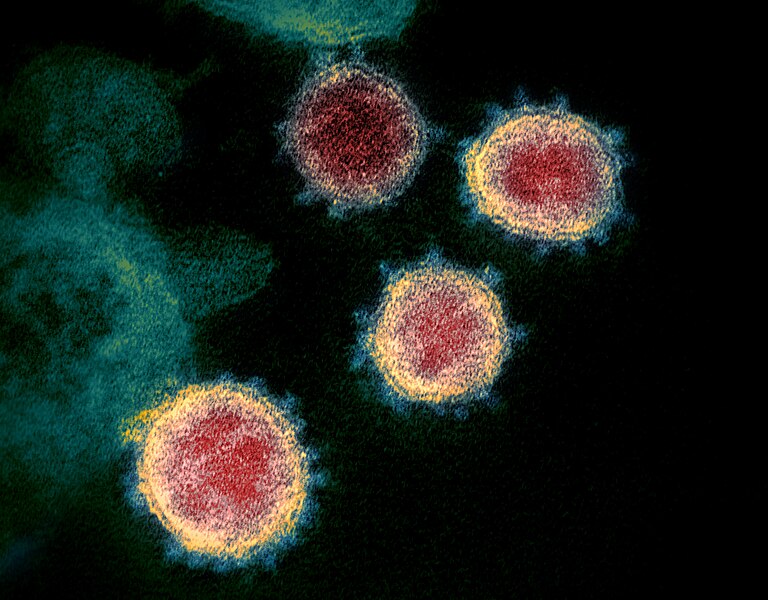
File:Novel Coronavirus SARS-CoV-2.jpg
Author NIAID  Licence CC BY 2.0


Jane Lambert

The suspension of so much business activity to facilitate social distancing does not mean that intellectual property is no longer a priority. On the contrary, it is now more important than ever.

If we are ever to stop Covid-19 in its tracks it will be through the efforts of universities and biotech and pharmaceutical companies around the world whose research will have to be funded.  Much of that funding will come from the private sector which will require legal protection for the revenue streams from which it will recoup such investment.

The businesses and institutions engaged in research in diagnostics, vaccines and cures will usually understand IP and have access to the best possible advice and representation but that will not necessarily apply to the many businesses, public health authorities and clinicians around the world who distribute those products. They need the best possible advice on patenting, licensing and technology transfer at affordable rates.

Also involved in the effort to stop the spread of the infection will be manufacturers and distributors of personal protective equipment, ventilators, respirators and various medical devices. It is there that there will be scope for small businesses and individuals to invent or design better products or components.  They will need help in putting their ideas and inventions into production.

It will not be just inventors, product designers and engineers who will contribute to this effort. Software developers who will track the spread of infection and the deployment of resources.  Artists and communicators will be needed to convey public health information to the public.

And when this emergency is over businesses will have to innovate and create as never before in order to restore our ravaged economy the planning for which has to start now.

Just at a time when entrepreneurs, inventors and others will require high-quality advice and representation more than ever, social distancing will make it more difficult to obtain.  So this is what I as an experienced IP practitioner will do to help.  Ever since the Public Access Scheme has been in operation I have set up and chaired inventors' clubs, run pro bono clinics in various parts of the UK and given talks at science parks, incubators, FabLabs, Business and IP Centres and other forums throughout the country.  I was due to speak to the inventors, makers and designers of Porthmadog at Ffiws Maker Space on 1 April 2020.  I had an IP clinic at Barnsley Business Village on 14 April 2020.  I was planning a high-level seminar on Green Innovation at the Menai Science Park on 27 April 2020 as Wales's contribution to World IP Day.

Now I can no longer keep these appointments in person but there is nothing to stop me from doing so online and that is precisely what I shall do.  Anybody who needs advice or assistance with an IP issue can contact me through my "Initial Advice and Signposting Form".  I can advise on IP law generally and represent clients in negotiations and disputes but I do not prosecute patent, design or trade mark applications, specialize in tax or company law, develop products or arrange funding.  However, I can probably direct clients to other experts such as patent or trade mark attorneys, commercial law firms, specialist accountants and product design consultants who can help with such issues.

I shall also be offering webinars to business owners, inventors, investors and indeed IP lawyers and attorneys for so long as social distancing has to continue.

Throughout this emergency the British and other intellectual property offices will remain open, most IP professionals will be working from home, the IPO and many courts will conduct hearings by phone or video link.  We may not be so easy to meet but there should be no suspension or diminution in the quality of services.

Anyone wanting to discuss this article can message me through my contact page.  If you want a chat I shall be glad to call you back by phone or Skype.

25 February 2020

IPO Guidance: Intellectual Property Insurance

Lloyd's Coffee House Source Wikipedia Insurance


Jane Lambert

The Intellectual Property Office ("IPO") has recently updated its guidance on IP insurance, It makes the point that such insurance may not be for every business but for some, it brings numerous benefits.  According to the guidance, those benefits are as follows:
  • "It can protect cash-flow: IP insurance can ensure that your dispute and particularly litigation, does not tie up capital which you could use to grow the business
  • it can provide a deterrent: LEI can give you the power to take action to enforce your rights where your financial position might not otherwise allow it. If a potential infringer knows that your insurance will cover making a claim, then it may be less likely to infringe or more likely they will stop when challenged. Some insurers are happy for you to confirm in marketing literature or on websites that your IP is insured, alerting competitors that insurance is in place
  • it can improve your negotiating position: If this deterrent does not work then the knowledge that you can go to court (as a last resort) can encourage the alleged infringer to negotiate or mediate. Insurance can provide you with the means to take vital defensive action meaning there will be no need to settle on poor terms
  • it might allow your IP to be used as collateral and can add value: Insurance can reassure lenders and investors that the value will not be lost because you cannot fight infringers/invalidity challenges. Potential licensees will also know that you can take legal action if necessary and will be indemnified if required."
Cover against the costs of litigation and other expenses is available both before and after an infringement has occurred.   Cover that is obtained before an infringement occurs is known as before-the-event ("BTE") insurance and cover after the infringement is known as after-the-event ("ATE") insurance.  As might be expected BTE insurance is considerably cheaper than ATE.  ATE policies were very popular before the Legal Aid, Sentencing and Punishment of Offenders Act 2012 came into force because a successful party could recover its premiums and its legal representatives' success fee from the losing party. That came to an end on 31 March 2013 (see Jane Lambert Intellectual Property Litigation - the Funding Options 10 April 2013 NIPC Law and Jane Lambert The Effect of the Legal Aid, Sentencing and Punishment of Offenders Bill on Intellectual Property Litigation 14 July 2011 NIPC Law). It is still possible to take out ATE insurance but the premiums must be paid by the insured. For that reason, such policies are much less common and the IPO guidance does not even bother to mention them.

The guidance lists the risks against which it is possible to insure.   These include:
  • opinion only: covers legal costs of obtaining an opinion on the likelihood of successfully enforcing or defending an IP claim;
  • enforcement and defence: covers legal costs of taking action to stop others infringing IP rights and defending allegations of infringement. Can cover enforcement and defence either separately or together
  • damages: covers any damages payable in an infringement action
  • validity: covers legal costs of defending challenges to the validity of the insured's IP rights
  • lost revenue: covers revenue lost as a result of losing IP rights
  • indemnity: covers liabilities arising under guarantees given to third parties, and
  • cyber: covers losses from a variety of cyber incidents, including IPR breaches.
Premiums and excesses are also considered in the guidance.   By way of a rough indication, a typical premium for £100,000 (the cost of patent infringement proceedings in the Intellectual Property Enterprise Court) would be about £1,500.  The guidance adds that many insurers will accept premiums by instalments.

A link to a list of brokers, insurers and other providers is in the guidance. Advice is given on identifying a broker, selecting the optimum cover, making a claim and resolving disputes with insurers through the Financial Ombudsman.  The guidance discusses alternative methods of resolving IP disputes such as examiners' opinions on such matters as whether a patent is valid or whether it is infringed, and the IPO's mediation service.

Readers are referred to the IP insurance pages of the Chartered Institute of Patent Attorneys and the Chartered Institute of Trade Mark Attorneys.  I have also written a number of articles on IP insurance since 2005 which are listed in the table below.  Anyone wishing to discuss this article or IP insurance generally can call me on 020 7404 5252 or send me a message through my contact page.