Showing posts with label research. Show all posts

06 July 2026

Sir Adrian Hill wins the European Inventor Award Research Category

Standard YouTube Licence 

Jane Lambert

The European Inventor Award is a biennial "celebration of the inventive spirit, the individual contributions of talented inventors, and the European patent system that protects inventions and encourages innovation" established by the European Patent Office in 2006.  Prizes are awarded for inventions in the following categories:
  • industry
  • research
  • Non-EPO countries
  • SMEs
  • lifetime achievement, and
  • popular prize.
Winners of each category receive a trophy in the form of a sail designed by Miriam Irle.

The research category celebrates inventors working at universities, research institutions or their spin-offs. The winner of this year's research category is Professor Sir Adrian Hill, Founding Director of the Jenner Institute and Chair of the Centre for Clinical Vaccinology and Tropical Medicine at the University of Oxford.  The invention for which this year's research award was granted was the R21/Matrix-M vaccine against malaria, more particularly described in European patent specification EP2945649 B1

According to Wikipedia, Sir Adrian was born in Ireland.   He attended Belvedere College SJ in Dublin, read medicine at Trinity College Dublin and Magdalen College, Oxford and carried out his doctoral research on the molecular genetics of thalassemia at Oxford.   As well as being a leader in malaria vaccine development, Sir Adrian was a co-leader of the research team that produced the Oxford–AstraZeneca COVID-19 vaccine.  He was knighted for his services in 2021.

Anyone wishing to discuss this article or the European Inventor Awards in general may call me on +44 (0)20 7404 5252 during normal office hours or send me a message through my contact form.

10 November 2024

European Universities' Patenting Activity


Jane Lambert

In October 2024 the European Patent Office published The Role of European Universities in Patenting and Innovation, A Study of Academic Inventions at the EPO.  The study claims to be "the first-ever comprehensive overview of the role European universities play in patenting and innovation on the European scale." 

The study notes that Europe is often perceived as a world-class academic power with top universities and publications. Europe faces difficulties transforming science into commercial activity compared to other advanced economies. The mismatch between academic excellence and commercial underperformance is sometimes called the 'European paradox'. The study states that this so-called European paradox has become a central policy issue in most European countries and also for the EU.

The study focuses on European universities' patenting activity as a way of addressing that paradox because a patent is essential to knowledge transfer. That is because an applicant for a patent is required by art 83 of the European Patent Convention to disclose the invention in a manner sufficiently clear and complete for it to be carried out by a person skilled in the art.   

One of the study's key findings is that the contribution of academic researchers to European patent applications has increased steadily in recent decades, and now exceeds 10% of all patents filed by European applicants at the EPO. The study finds that more than 1,200 European universities have generated patent applications at the EPO. Annex 2 to the study lists the top 10 universities for Germany, France and the UK and the top 5 for other countries between the years 2000 and 2020. There are 7 universities with over 1,000 academic patents in Germany, 6 in France and 4 in the UK (Oxford, Cambridge, Imperial and UCL). Denmark, Sweden and Switzerland have 2 such universities each and Belgium, Finland and the Netherlands one each.

It is undeniably a good thing that knowledge is widely disseminated while being properly protected it has to be remembered that universities are not businesses though most have knowledge transfer offices and licensing companies.  It is my experience that they occasionally claim greater legal protection than they need or in some cases to which they are entitled to the detriment of the businesses that pay for the research,  
 
Any business contemplating research cooperation with a British university should seek advice either from a patent attorney or a solicitor or counsel specializing in IP with experience in licensing.  The Intellectual Property Office publishes several model university and business collaboration agreements known as "the Lambert toolkit".  The name of the toolkit refers to Sir Richard Lambert and not to me though I did attend one of the drafting sessions and thus made a small contribution towards their drafting.

Anyone wishing to discuss this article may call me on +44 (0)20 7404n 5252 during UK office hours or send me a message through my contact form at all other times.

23 March 2020

IP Services During the Emergency

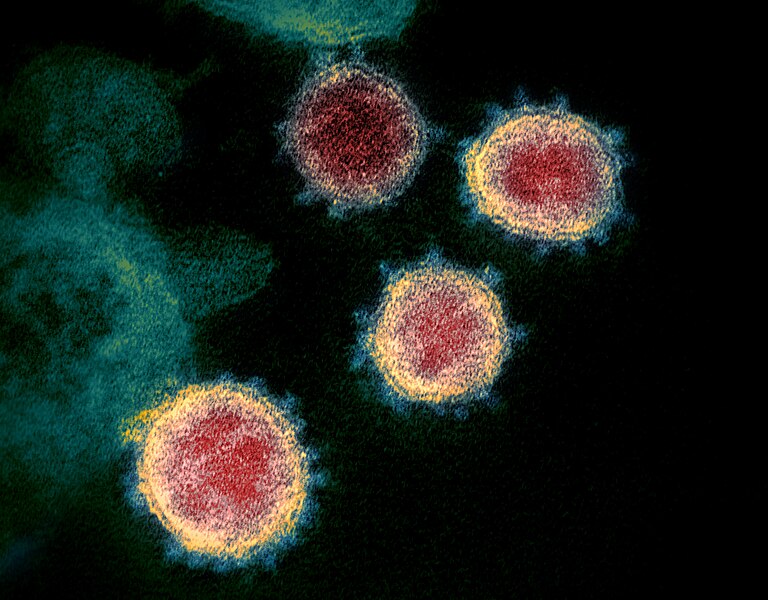
File:Novel Coronavirus SARS-CoV-2.jpg
Author NIAID  Licence CC BY 2.0


Jane Lambert

The suspension of so much business activity to facilitate social distancing does not mean that intellectual property is no longer a priority. On the contrary, it is now more important than ever.

If we are ever to stop Covid-19 in its tracks it will be through the efforts of universities and biotech and pharmaceutical companies around the world whose research will have to be funded.  Much of that funding will come from the private sector which will require legal protection for the revenue streams from which it will recoup such investment.

The businesses and institutions engaged in research in diagnostics, vaccines and cures will usually understand IP and have access to the best possible advice and representation but that will not necessarily apply to the many businesses, public health authorities and clinicians around the world who distribute those products. They need the best possible advice on patenting, licensing and technology transfer at affordable rates.

Also involved in the effort to stop the spread of the infection will be manufacturers and distributors of personal protective equipment, ventilators, respirators and various medical devices. It is there that there will be scope for small businesses and individuals to invent or design better products or components.  They will need help in putting their ideas and inventions into production.

It will not be just inventors, product designers and engineers who will contribute to this effort. Software developers who will track the spread of infection and the deployment of resources.  Artists and communicators will be needed to convey public health information to the public.

And when this emergency is over businesses will have to innovate and create as never before in order to restore our ravaged economy the planning for which has to start now.

Just at a time when entrepreneurs, inventors and others will require high-quality advice and representation more than ever, social distancing will make it more difficult to obtain.  So this is what I as an experienced IP practitioner will do to help.  Ever since the Public Access Scheme has been in operation I have set up and chaired inventors' clubs, run pro bono clinics in various parts of the UK and given talks at science parks, incubators, FabLabs, Business and IP Centres and other forums throughout the country.  I was due to speak to the inventors, makers and designers of Porthmadog at Ffiws Maker Space on 1 April 2020.  I had an IP clinic at Barnsley Business Village on 14 April 2020.  I was planning a high-level seminar on Green Innovation at the Menai Science Park on 27 April 2020 as Wales's contribution to World IP Day.

Now I can no longer keep these appointments in person but there is nothing to stop me from doing so online and that is precisely what I shall do.  Anybody who needs advice or assistance with an IP issue can contact me through my "Initial Advice and Signposting Form".  I can advise on IP law generally and represent clients in negotiations and disputes but I do not prosecute patent, design or trade mark applications, specialize in tax or company law, develop products or arrange funding.  However, I can probably direct clients to other experts such as patent or trade mark attorneys, commercial law firms, specialist accountants and product design consultants who can help with such issues.

I shall also be offering webinars to business owners, inventors, investors and indeed IP lawyers and attorneys for so long as social distancing has to continue.

Throughout this emergency the British and other intellectual property offices will remain open, most IP professionals will be working from home, the IPO and many courts will conduct hearings by phone or video link.  We may not be so easy to meet but there should be no suspension or diminution in the quality of services.

Anyone wanting to discuss this article can message me through my contact page.  If you want a chat I shall be glad to call you back by phone or Skype.

26 March 2009

Investing wisely in IP - my 6-Point Plan for any Business

A patent, copyright, trade mark, registered design or other IP right is nothing more than a right to bring a law suit. Its purpose is to protect the income generated by an intellectual asset, that is to say, a brand, design, technology or creative work.   Such protection does not come cheap.   According to research commissioned by the EPO, it costs €32,000 to obtain a typical European patent and maintain it for 10 years.   That is an awful lot of money to spend considering that most patents are never worked.   Enforcement is even more expensive. IPAC (HM government’s high level advisory committee on intellectual property) estimates that a patent infringement action costs £1 million in the High Court.  That explains why I have seen far more businesses fail from having too much IP than from having too little in my 32 years at the English bar.  

Yet there are circumstances in which a business needs to protect its investment in branding, design, technology or creative works. How does a businessman or woman recognize such circumstances and how does he or she choose the optimum legal protection.   Here is a simple 6-point plan that can apply to just about any business.

1.   Choose a period in which you expect your business to develop.   This can be any period of your choosing which will probably depend on the nature of your business and products and services.   For a company in the fashion or novelties business this could be a matter of months or even weeks.   For a pharmaceutical company it could be decades.

2.   Identify the main income streams that you expect to develop in that period.   IP is intended to protect income streams,   If your invention is never going to earn money whether directly or indirectkly through sale or licensing why waste thousands of pounds on patenting it?  Similarly, if you have no sales in country X and are never likely to have any why seek intellectual property proteciton there? You may want tpo protect yourself in country X it it has a sufficient industrial base to allow a competitor to set up there but, if not, why bother?       

3.   Consider potential threats to each of those income streams.   Competition from competing products or services may be one but there may be others such as changing patterns of demand or the general economic situation.

4.   List possible counter-measures to those threats.   Most of these will be commercial rather than legal such as cutting your prices or developing new products or services but for some threats such as plagiarism you may actually need some legal protection such as a patent or design registration.

5.   If any of those counter-measurers is an IP right, choose the most appropriate one for your business.   There is usually a choice. For instance, one way of protecting a new product or process is simply to keep it under wraps and seek to rely on the law of confidence to prevent unauthorized use or disclosure. The other is to proclaim it to the world in exchange for a temporary monopoly of the manufacture, sale and use of the product or use of the process (otherwise known as a “patent”). Where the technology has only a short shelf-life, a 20-year monopoly is otiose.   On the other hand, if you are a drug company which has invested millions in R & D in a new product and waited years for approval from drug licensing authorities you need patent protection in every country of the world of you are to see an adequate return on your investment.

6.   Ensure that there is adequate funding for enforcement proceedings.    Unless you can afford hundreds of thousands of pounds on litigation and can risk at least as much again if you lose your case with equanimity you should think of IP insurance.   Though these articles need to be updated you can start with two articles that I wrote in September 2005: “IP Insurance. Does it Work” (IP/IT Update) and “IP Insurance” (NIPC Inventors Club).

These and other tips are all set out in my presentation to Leeds Inventors Club “So you think you want a Patent?” which I gave on 18 April 2008.   I also discuss them in my book “Enforcing Intellectual property Rights” which appeared earlier this month.