Showing posts with label clinics. Show all posts

23 March 2020

IP Services During the Emergency

File:Novel Coronavirus SARS-CoV-2.jpg
Author NIAID  Licence CC BY 2.0


Jane Lambert

The suspension of so much business activity to facilitate social distancing does not mean that intellectual property is no longer a priority. On the contrary, it is now more important than ever.

If we are ever to stop Covid-19 in its tracks it will be through the efforts of universities and biotech and pharmaceutical companies around the world whose research will have to be funded.  Much of that funding will come from the private sector which will require legal protection for the revenue streams from which it will recoup such investment.

The businesses and institutions engaged in research in diagnostics, vaccines and cures will usually understand IP and have access to the best possible advice and representation but that will not necessarily apply to the many businesses, public health authorities and clinicians around the world who distribute those products. They need the best possible advice on patenting, licensing and technology transfer at affordable rates.

Also involved in the effort to stop the spread of the infection will be manufacturers and distributors of personal protective equipment, ventilators, respirators and various medical devices. It is there that there will be scope for small businesses and individuals to invent or design better products or components.  They will need help in putting their ideas and inventions into production.

It will not be just inventors, product designers and engineers who will contribute to this effort. Software developers who will track the spread of infection and the deployment of resources.  Artists and communicators will be needed to convey public health information to the public.

And when this emergency is over businesses will have to innovate and create as never before in order to restore our ravaged economy the planning for which has to start now.

Just at a time when entrepreneurs, inventors and others will require high-quality advice and representation more than ever, social distancing will make it more difficult to obtain.  So this is what I as an experienced IP practitioner will do to help.  Ever since the Public Access Scheme has been in operation I have set up and chaired inventors' clubs, run pro bono clinics in various parts of the UK and given talks at science parks, incubators, FabLabs, Business and IP Centres and other forums throughout the country.  I was due to speak to the inventors, makers and designers of Porthmadog at Ffiws Maker Space on 1 April 2020.  I had an IP clinic at Barnsley Business Village on 14 April 2020.  I was planning a high-level seminar on Green Innovation at the Menai Science Park on 27 April 2020 as Wales's contribution to World IP Day.

Now I can no longer keep these appointments in person but there is nothing to stop me from doing so online and that is precisely what I shall do.  Anybody who needs advice or assistance with an IP issue can contact me through my "Initial Advice and Signposting Form".  I can advise on IP law generally and represent clients in negotiations and disputes but I do not prosecute patent, design or trade mark applications, specialize in tax or company law, develop products or arrange funding.  However, I can probably direct clients to other experts such as patent or trade mark attorneys, commercial law firms, specialist accountants and product design consultants who can help with such issues.

I shall also be offering webinars to business owners, inventors, investors and indeed IP lawyers and attorneys for so long as social distancing has to continue.

Throughout this emergency the British and other intellectual property offices will remain open, most IP professionals will be working from home, the IPO and many courts will conduct hearings by phone or video link.  We may not be so easy to meet but there should be no suspension or diminution in the quality of services.

Anyone wanting to discuss this article can message me through my contact page.  If you want a chat I shall be glad to call you back by phone or Skype.

01 July 2017

Animated Advice from across the Pond


Standard YouTuve Licence


Jane Lambert

In Animated Advice 18 March 2016 NIPC News I introduced readers to some animations published by the Intellectual Property Office, the World Intellectual Property Organization and others. One of the films I mentioned was the IPO's IP BASICS: Should I get a patent?

Today I want to share with you an even more helpful animation published by the US Patent and Trademark Office ("USPTO") so long as you bear in mind that the USA is a different country, with different institutions and different laws. However, the United States like the United Kingdom is party to a number of international agreements such as the Paris Convention for the Protection of Industrial Property and the Agreement on Trade-Related Aspects of Intellectual Property Rights ("TRIPS") which requires each country's intellectual property laws to be broadly similar.

Here are also some points to bear in mind for British readers:
  • The USPTO is the place to start for inventors in the USA because it is the intellectual property office for that country but inventors in this country can start either at the Intellectual Property Office in Newport (look you) or the European Patent Office in Munich ("there's lovely for you!" as they say in Wales).
  • Our law does not expressly define an invention though it does list a number of things that can't be patented as such like computer programs or methods of doing business which are not specifically excluded in US law. Also, we cut out some of the verbiage like "machine" or "composition of matter." Basically, an invention can be patented on this side of the Atlantic if it is a product or process.
  • One reason why I really like this animation is that it advises inventors to consider writing a business plan and carry out some market research. I've been ramming that message home in my IP clinics, talks to inventors' clubs and blogs for years. Here is just one of my articles: "Why every business plan should take account of intellectual property" 3 Apr 2016 NIPC News.
  • The places where you can get help with your invention in this country would be the Business and IP Centres at the British Library next to St Pancras Station in London and the central libraries of Birmingham, Exeter, Hull, Leeds, Liverpool, Manchester, Manchester, Newcastle, Northampton, Norwich and Sheffield. Those libraries are also part of a wider network of public libraries that are associated with the EPO called PatLib. If you study the list you will find help available in Aberdeen. Belfast, Glasgow, Plymouth and Portsmouth.  We no longer have anything quite as good as Business USA.gov in this country but we do have the Business and Self-Employed pages of the gov.uk website. Also, you can call me on 020 7404 5252 any time during business hours and I can point you in the right direction.
  • As in the USA, you can apply to the IPO or EPO for a patent without instructing a patent attorney but I would strongly advise you against it.  I know patent attorneys don't come cheap but there are funding schemes here to help you (see How Small Businesses can fund IP Advice and Representation 3 Sept 2016 NIPC News). By the way, the terms "patent agent" and "patent attorney" mean different things in the USA. There, a patent attorney means a lawyer specializing in IP but a patent agent is a non-legally qualified professional who prosecutes patent applications. Here, the terms patent attorneys and patent agents are used interchangeably. Patent attorneys in the UK are members of the Chartered Institute of Patent Attorneys which used to be called the Chartered Institute of Patent Agents until a few years ago. Finally, the expression "pro se" is not used in this country. Those who apply for patents without the help of patent attorneys are usually referred to as "unrepresented applicants". 
  • In this country, we don't have "utility", "design" or "plant patents" as such but we do have registered and registered Community designs (for the time being) and EU and national plant breeders' rights  (see Jane Lambert Protecting Investment in New Plant Varieties 4 May 2016 LinkedIn). What Americans call "utility patents" are simply "patents" here.
  • There is no call centre in Newport or Munich like the Inventors Assistance Center but both the IPO and EPO publish guidance for unrepresented applicants on their websites and the Chartered Institute of Patent Attorneys, Ideas 21 and I hold free consultations with an IP professional at towns and cities around the UK. Check out CIPA's IP Clinics page and Ideas 21's regular advice sessions in London. Mine are held in Barnsley on the second Tuesday of every month and you can book your appointment through the BarnsleyBiz Surgeries page.
Wherever you are in the country, you can call me on 020 7404 5252 during office hours or send me a message through my contact form.

03 January 2016

Joy


(c) 20th Century Fox, All rights reserved, Standard YouTube licence


Yesterday I saw Joy at the National Media Museum. I am not setting myself up as a cinema critic but I thoroughly enjoyed that film.  I would recommend it to anyone but particularly to the inventors who come to my or other peoples' patent clinics or attend meetings of their local inventors' clubs. Loosely based on the life story of Joy Magnano it charts the struggle of a young woman inventor to invent, design, develop and market a highly absorbent self-wringing mop with a detachable head.

The film has some valuable lessons which apply on this side of the Atlantic at least as much as they do on the other:
  1. Take specialist professional advice from the very start. The fictional Joy got into trouble because she was advised by a non-specialist lawyer to pay royalties to, and source components from, a company that claimed to be the licensee of a Hong Kong inventor who had anticipated Joy's invention. In fact, the Hong Kong inventor had done nothing of the kind. She found that her supplier had taken money from her under false pretences. Had she consulted a patent attorney or specialist lawyer she would have learned that there was no prior patent. It would probably never have occurred to her to deal with the rogue at all and she would certainly not have paid him any royalties.
  2. Get the right management team.  Joy relied on her feckless father and his wealthy girlfriend to assist her in the management of the business. Neither of them knew as much about business as they claimed. Their advice was not just wrong but dangerous at times. Worse, Joy's father sent his daughter from another marriage who had no commitment to the project and resented her half-sister's success to negotiate with the fraudulent supplier. The half sister agreed to pay the supplier more than the product's retail price thereby jeopardizing the whole business. The only members of Joy's family who were of any use to her were her grandmother and ex-husband. The best advice she received was from the boss of the shopping channel that launched her product.
  3. Plot a clear route to market before launching into production.  Joy ordered several thousand dollars worth of components and engaged a number of Spanish speaking ladies to assemble her mops before she knew how and where she could sell them. She tried local hardware shops. The shopkeepers were not interested because she could not pay them to display her mops in their shop windows. She approached established mop manufacturers. They were the last people to be interested in a mop that would rarely need to be replaced.  She even tried to flog them in the car park of a local supermarket to the store's customers. Not surprisingly the store management objected and called on the police to move her on.  Joy's break came when her ex-husband introduced her to a friend who ran a shopping channel. Even then there were several false starts. The presenter who tried to sell the product muffed his sales pitch and Joy nearly froze when she made her début in front of the cameras. However, after that the orders started to roll in though Joy's troubles were far from over at that stage.
  4. Believe in yourself and rely on your own judgment.  In the film Joy had been a star pupil at secondary school but she never went to university because she had to look after her parents after their divorce.  Neither parent deserved that sacrifice. Her mother spent her day in bed watching television and her father embarrassed her at her wedding reception. That did not stop either parent or indeed the rest of her family and outsiders from putting her down. Only her grandmother believed in her and she died before Joy had established her business.  There were several moments when all seemed to be lost and her family tried to persuade her to give up the enterprise but she held her nerve. Eventually she discovered that she had been cheated.  She travelled to Texas to confront the individual who had defrauded her and forced him to reassign her intellectual property in the invention and pay her compensation.
  5. Be ready to take the next step.   The real Joy Magnano has a whole suite of products which are offered for sale on the shopping page of her website.  The mop proved to be spectacularly successful but that was exceptional.  The best that can be expected of most inventions is to provide a temporary competitive advantage.  It rarely takes long for a competitor to catch up with a new product or business idea.  If you are to stay ahead you have to take yet another step.  The last scene of the film showed Joy as a successful business woman mentoring a young female inventor from Arkansas. In real life she runs several businesses including a shopping channel and a body known as the Joy Magnano Foundation.
According to the History vs Hollywood website the film is not an entirely accurate record of Joy Magnano's life.  The real Joy never had a half sister, she graduated from Pace University with a business degree, she had three children and not two. Nevertheless, there is a lot of the film that is true and certainly the lessons that I listed above are founded on fact.

So where do British inventors get help?  

In the UK unlike America there is a separate profession of patent attorneys (also known as patent agents) who are regulated by IPReg (the IP Regulation Board). IPReg keeps searchable registers of patent and trade mark attorneys. Patent attorneys can help you with searches, drafting and filing patent specifications and correspondence with the UK and other intellectual property offices. Some attorneys are qualified to conduct litigation or appear as advocates in the Patents Court or Intellectual Property Enterprise Court.

If a patent attorney needs advice on a difficult point of law, some tricky drafting or representation before a hearing officer or a judge he or she may consult patent counsel (a barrister specializing in intellectual property law).  To find out how our profession can help inventors, read my article IP Services from Barristers 6 April 2013. Most specialist barristers belong to the Intellectual Property Bar Association and many of us accept instructions directly from the public.

If you are in a complex commercial transaction or litigation involving intellectual property you may need to see a solicitor but make sure that he or she is an expert in IP.  Most firms with expertise in IP belong to the IP Lawyers Association.

Before instructing a patent attorney or lawyer you can get up to 30 minutes of an attorney or lawyer's time free of charge at a patent clinic. I run one at Barnsley on the second Tuesday of every month between 10:00 and 12:00. There are others run by the Chartered Institute of Patent Attorneys at Aberdeen, Birmingham, Leeds, Liverpool, London, Manchester, Newcastle, Newport, Peterborough, Plymouth, Portsmouth, Sheffield and Southampton.

There are also lots of talks and workshops on business planning, licensing, marketing, patenting and other topics at the Business and IP Centre of the British Library at St Pancras and the Business and IP Centres of the Birmingham, Leeds, Liverpool, Manchester, Newcastle and Sheffield Central Libraries. They will also put you in touch with reliable experts in the areas in which you need advice.

You will also find a massive accumulation of useful information in this and my other blogs.  If you can't find what you are looking for call me on 020 7404 5252 during office hours or message me through my my contact form

Finally, I wish you the best of luck with your venture and a happy New Year.

02 January 2015

Congratulations to Trevor Baylis CBE

Trevor Baylis
Photo Wikipedia


I should like to congratulate Trevor Baylis on his CBE for intellectual property.

I met Mr Baylis when I chaired the Brass from Gumption open day in Huddersfield on the 18 Feb 2004. This was a full day of seminars, exhibitions, patent searches, patent clinics and a simulated “Baylis Breakout” by the man himself. It was a great success which led to my setting up inventors' clubs at Leeds, Liverpool and Sheffield and regular intellectual property clinics throughout the North,

I have not seen eye to eye with him on every issue but I share his objective of helping individual inventors to realize their ambitions. I wish him every success in those endeavours.

29 March 2012

HutchinsonIP's First Anniversary

Over the last year I have done a lot of work with Tom Hutchinson of HutchinsonIP. This has included seminars to the Manchester FabLab and freerange at Carlisle (see "FabLab Manchester - Introduction to Intellectual Property" 6 Nov 2011 and "Introducing IP to Freerange Artists in Carlisle" of 10 March 2012 in my IP North West blog) as well as professional work. Tom has been one of the best patent agents I have ever worked with and I have known a few in my time..

As his firm passed its first anniversary Tom recruited a trade mark attorney. He can now cover the whole spectrum of IP work from patents and registered designs to British and Community trade marks as well as unregistered design right, unregistered Community designs, semiconductor topographies, copyrights and rights in performances.

Until the Chartered Institute of Patent Attorneys and Liverpool Central Library can reopen the Liverpool patent clinic, I shall be referring any enquiries that require advice from a patent or trade mark attorney from Merseyside, North Wales, the Wirral and West Lancashire to HutchinsonIP.  Should you wish to consult the NIPC IP Clinic you should complete our on-line enquiry form or call me 0800 862 0055.

If you want to consult Tom directly he practises from

Hutchinson IP Ltd
57 Hoghton Street
Southport
PR9 0PG
Tel: 01704 532 683
mail@hutchinsonip.com

11 April 2011

Resources for Inventors in South West England

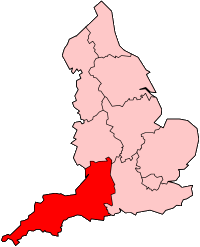
South West England consists of the counties of Cornwall, Devon, Dorset, Gloucestershire, Somerset and Wiltshire. the city of Bristol and the Isles of Scilly. The region covers an area of 23,828 square kilometres and has a population of just under 5 million.

Regional Development
The regional development agency for the region is the South West Regional Development Agency. This will be abolished with all the other RDAs by March 2012. Proposals for local enterprise partnerships have been accepted for:
There are clinics at Bristol Central Library and the University of Plymouth. Inventors in South West England can also access online advice and, where appropriate, introduction to local patent and trade mark agents and other intellectual property practitioners through NIPC Clinics.

There are three CDFIs in South West England:
  • Bristol Enterprise Development Fund for the Bristol Metropolitan Area
  • Frederick's Foundation which has branches in Devon, Dorset, Gloucester, Somerset and Wiltshire; and
  • South West Investment Group which covers the whole of the region.
The South West Inventors Club meets on the third Wednesday of the month at Yeovil to discuss members' inventions, intellectual property, funding and other matters.

There are PATLib libraries at Bristol and Plymouth.

Professional Advice
We are building up a network of local patent and trade mark attorneys, specialist solicitors and other professionals in South West England. You can access that network by calling us on 0117 325 6300.

Further Information
We have a page on inventors' resources in South West England on the Inventors' Club website which we shall update and expand as and when we can. We have an Inventors Club group on Linkedin and you can of course join the Inventors Club itself. If you want to contact us you can also get in touch through our contact form.