Showing posts with label British Library. Show all posts

08 April 2024

The British Library Inventors' Club

British Library
Author Jack1956  Public Domain  Source Wikimedia Commons


I am delighted to report that the British Library has set up an "Inventors Club". and I wish its organizers and members every success,  The Club meets on the last Monday of every month. The next meeting will take place between 18:00 and 19:30 on 29 April 2024. According to the Eventbrite registration card, there will be talks by innovators who have already brought their products to market or have licensed their intellectual property,   The organizers are Mr Bob Lindsey who set up and chaired an inventors' club in Kingson and Mr Mark Shehan who has been the British Library's "inventor in residence",

I have written a longer article about this initiative in NIPC London.

Anyone wishing to discuss this article may call me on 020 7404 5252 or message me through my contact page.

15 May 2019

How to make Money from your Invention - Starting your own Business

Jane Lambert


On 13 Sept 2017, I introduced readers to the Inventors Handbook on the European Patent Office's website which suggests four ways of exploiting an invention in its Exploitation Routes page:
  • "A licensing agreement with a company
  • Business start-up: get your idea to market yourself
  • A joint venture 
  • Outright sale of your idea."
I discussed the first way in How to Make Money from your Invention: Licensing on 14 Sept 2017. This article discusses the second option, namely a business start-up.

Before starting on this route inventors should satisfy themselves that they have the right personal qualities. Wherever they live in the UK, a good place to start is Business Wales's Starting up and Business Planning page.  In particular, they should read Is self-employment for you? and complete the Assess Your Personal Qualities questionnaire. There may be options even for those who score badly on that assessment such as employment or a consultancy with a business to be set up by others who are of the right temperament and possess the right skills and experience.  Considerably caution should be exercised by both sides in those circumstances.  Any agreement should be properly documented with both sides taking legal and accounting advice.

The next question for inventors is whether they have the right skills.   Some of these can be taught.  The Business and IP Centre at the British Library and its national network of city centre libraries host free or inexpensive courses and workshops on all sorts of topics from accounting to writing business plans. Other good places to learn include Tech Nation's Digital Academy and the Google Campus.  Another option is to build a team.  Again, that requires caution. professional advice for all concerned and full documentation.  Ideally, there should be a professionally drafted shareholders' or other agreement between the promoters with robust dispute resolution procedures in case things go wrong.

Such an agreement should incorporate or at least refer to a business plan and it goes without saying that the business plan should take account of intellectual property (see Jane Lambert Why Every Business Plan Should Take Account of Intellectual Property 3 April 2016 NIPC News). The business plan should be more than something to impress the bank manager.  It should be the company's road map.  The business plan should coordinate every aspect of the company's activities and policy including research and development, marketing and of course intellectual property (see An IP Strategy for Private Inventors  13 Jan 2019).

The business plan will be relied upon by the company's investors and lenders.  Long term investment to enable the company to buy or hire premises, equipment, vehicles and the like will be exchanged for shares in the company.  That is called "equity investment" and it is usually provided by inventors' friends and family, business angels and private equity or venture capital investors.  Working capital to cover components or raw materials, professional service and other short term costs may be provided by the company's bankers or, increasingly frequently, peer-to-peer lenders.  This is often referred to as "debt".  Lenders may require security over the company's assets but they are unlikely to wish to interfere in its management. Equity investors 0ften want representation on the board. Again, both sides should take professional advice and document any agreement that they may reach in a shareholders' agreement or some other instrument.

Inventors should be aware that very few fortunes are made from a single invention.  It may give their business an advantage for a time but that advantage will usually be eroded as competitors' launching their own new products or services. Research and development and innovation should continue.  Inventors should always be looking for the next gap in the market or other business opportunity.

Anyone wishing to discuss this article or inventions generally should call me on 020 7404 5252 during office hours or send me a message through my contact page.

03 January 2016

Joy


(c) 20th Century Fox, All rights reserved, Standard YouTube licence


Yesterday I saw Joy at the National Media Museum. I am not setting myself up as a cinema critic but I thoroughly enjoyed that film.  I would recommend it to anyone but particularly to the inventors who come to my or other peoples' patent clinics or attend meetings of their local inventors' clubs. Loosely based on the life story of Joy Magnano it charts the struggle of a young woman inventor to invent, design, develop and market a highly absorbent self-wringing mop with a detachable head.

The film has some valuable lessons which apply on this side of the Atlantic at least as much as they do on the other:
  1. Take specialist professional advice from the very start. The fictional Joy got into trouble because she was advised by a non-specialist lawyer to pay royalties to, and source components from, a company that claimed to be the licensee of a Hong Kong inventor who had anticipated Joy's invention. In fact, the Hong Kong inventor had done nothing of the kind. She found that her supplier had taken money from her under false pretences. Had she consulted a patent attorney or specialist lawyer she would have learned that there was no prior patent. It would probably never have occurred to her to deal with the rogue at all and she would certainly not have paid him any royalties.
  2. Get the right management team.  Joy relied on her feckless father and his wealthy girlfriend to assist her in the management of the business. Neither of them knew as much about business as they claimed. Their advice was not just wrong but dangerous at times. Worse, Joy's father sent his daughter from another marriage who had no commitment to the project and resented her half-sister's success to negotiate with the fraudulent supplier. The half sister agreed to pay the supplier more than the product's retail price thereby jeopardizing the whole business. The only members of Joy's family who were of any use to her were her grandmother and ex-husband. The best advice she received was from the boss of the shopping channel that launched her product.
  3. Plot a clear route to market before launching into production.  Joy ordered several thousand dollars worth of components and engaged a number of Spanish speaking ladies to assemble her mops before she knew how and where she could sell them. She tried local hardware shops. The shopkeepers were not interested because she could not pay them to display her mops in their shop windows. She approached established mop manufacturers. They were the last people to be interested in a mop that would rarely need to be replaced.  She even tried to flog them in the car park of a local supermarket to the store's customers. Not surprisingly the store management objected and called on the police to move her on.  Joy's break came when her ex-husband introduced her to a friend who ran a shopping channel. Even then there were several false starts. The presenter who tried to sell the product muffed his sales pitch and Joy nearly froze when she made her début in front of the cameras. However, after that the orders started to roll in though Joy's troubles were far from over at that stage.
  4. Believe in yourself and rely on your own judgment.  In the film Joy had been a star pupil at secondary school but she never went to university because she had to look after her parents after their divorce.  Neither parent deserved that sacrifice. Her mother spent her day in bed watching television and her father embarrassed her at her wedding reception. That did not stop either parent or indeed the rest of her family and outsiders from putting her down. Only her grandmother believed in her and she died before Joy had established her business.  There were several moments when all seemed to be lost and her family tried to persuade her to give up the enterprise but she held her nerve. Eventually she discovered that she had been cheated.  She travelled to Texas to confront the individual who had defrauded her and forced him to reassign her intellectual property in the invention and pay her compensation.
  5. Be ready to take the next step.   The real Joy Magnano has a whole suite of products which are offered for sale on the shopping page of her website.  The mop proved to be spectacularly successful but that was exceptional.  The best that can be expected of most inventions is to provide a temporary competitive advantage.  It rarely takes long for a competitor to catch up with a new product or business idea.  If you are to stay ahead you have to take yet another step.  The last scene of the film showed Joy as a successful business woman mentoring a young female inventor from Arkansas. In real life she runs several businesses including a shopping channel and a body known as the Joy Magnano Foundation.
According to the History vs Hollywood website the film is not an entirely accurate record of Joy Magnano's life.  The real Joy never had a half sister, she graduated from Pace University with a business degree, she had three children and not two. Nevertheless, there is a lot of the film that is true and certainly the lessons that I listed above are founded on fact.

So where do British inventors get help?  

In the UK unlike America there is a separate profession of patent attorneys (also known as patent agents) who are regulated by IPReg (the IP Regulation Board). IPReg keeps searchable registers of patent and trade mark attorneys. Patent attorneys can help you with searches, drafting and filing patent specifications and correspondence with the UK and other intellectual property offices. Some attorneys are qualified to conduct litigation or appear as advocates in the Patents Court or Intellectual Property Enterprise Court.

If a patent attorney needs advice on a difficult point of law, some tricky drafting or representation before a hearing officer or a judge he or she may consult patent counsel (a barrister specializing in intellectual property law).  To find out how our profession can help inventors, read my article IP Services from Barristers 6 April 2013. Most specialist barristers belong to the Intellectual Property Bar Association and many of us accept instructions directly from the public.

If you are in a complex commercial transaction or litigation involving intellectual property you may need to see a solicitor but make sure that he or she is an expert in IP.  Most firms with expertise in IP belong to the IP Lawyers Association.

Before instructing a patent attorney or lawyer you can get up to 30 minutes of an attorney or lawyer's time free of charge at a patent clinic. I run one at Barnsley on the second Tuesday of every month between 10:00 and 12:00. There are others run by the Chartered Institute of Patent Attorneys at Aberdeen, Birmingham, Leeds, Liverpool, London, Manchester, Newcastle, Newport, Peterborough, Plymouth, Portsmouth, Sheffield and Southampton.

There are also lots of talks and workshops on business planning, licensing, marketing, patenting and other topics at the Business and IP Centre of the British Library at St Pancras and the Business and IP Centres of the Birmingham, Leeds, Liverpool, Manchester, Newcastle and Sheffield Central Libraries. They will also put you in touch with reliable experts in the areas in which you need advice.

You will also find a massive accumulation of useful information in this and my other blogs.  If you can't find what you are looking for call me on 020 7404 5252 during office hours or message me through my my contact form

Finally, I wish you the best of luck with your venture and a happy New Year.

15 October 2015

A Sad but not Unusual Tale of an Inventor


Mr Perry invented a fence bracket.  In his abstract he described it as
"A fence bracket comprises a main plate 10 adapted to overlie the top edge of a fence panel 18, and depending sides, which may be triangular and apertured as shown, which form a channel to receive the panel, and apertured tabs 14, 16, for the receipt of fasteners 22 to attach the bracket to post 20. An alternative form has a back plate 41 (Fig 4A, not shown) which lies against post 20."
He appears to have applied for a patent by himself for he is named as the agent on the specification. His application was duly granted under British patent number GB3920104.

Mr Perry believed that a wholesaler called FH Brundle sold products that infringed his patent and he wrote to the company's CEO in the following terms on 5 Oct 2012:
"FAO: Chief Executive/Chairman
Notice Before Proceedings
Infringement of Patent GB2390104, 4 August 2003 - October 2011 Through Sales Of Betafence's Nylofor 3D Bracket And 3M Panel
Claim for Damages Under the Patents Act 1977.
Sirs,
I have written to your Company in the past to see if you would have any interest in stocking any of my fencing products and your reply was that you didn't sell any of these products or that type of fencing and your Company had no interest.
It has now been brought to my attention that your Company has been selling a product of Betafence known as Nylofor 3D bracket that is used to install Nylofor fencing, for over at least 5 years, according to your Southampton office and you in fact still sell these products.
This Nylofor product infringes my Patent and I demand that you provide an Account of Profits of direct profit on sales of:
1. The quantity of the Nylofor 3D bracket you have sold between August 2003 – October 2011.
2. The number of Nylofor 3M fence panels that have been sold during the same period that are installed using the Nylofor bracket.
3. The number of fence posts sold corresponding with the number of fence panels sold during the same period.
4. The quantity of add on products sold such as the allen key tool specifically designed to use with the Nylofor 3D bracket.
I am legally entitled to a share of these profits whilst the Patent was in force and which is currently being restored to the register, as it had lapsed temporarily due to Patent Office error in late 2011.
I intend to take proceedings against your Company in the High Court if no amicable solution can be reached regards paying me my share of the profits for your use of my inventions without any licence to do so. Please respond within 14 days or I will commence proceedings against your Company.
Sincerely,"
Mr Perry's letter constituted a threat of proceedings for the infringement of a patent within the meaning of s.70 of the Patents Act 1977. I discussed that section and similar provisions in other intellectual property statutes and regulations in If you think someone has infringed your patent talk to a lawyer first 11 July 2014.

Solicitors acting for the wholesaler replied on the 15 Oct 2013. They denied that their client had infringed the patent, complained that the letter constituted an actionable threat and invited Mr Perry to withdraw it. On 21 Nov 2012 Mr Perry rejected their complaint and demanded particulars of their client's sales:
"Para. 6 Just to clarify, according to you, your client will be ignoring the Cease and Desist Notice and will continue to sell the infringing products. As you and your client both take the Patent Infringement very seriously, you will be providing the information I have asked you for and in the meantime I will put a hold on taking any legal proceedings against your client."
The solicitors repeated their request to Mr Perry to withdraw his threats which were met with yet another letter dated 18 Dec 2012:
"In your initial letter you are claiming 'unjustified threats of legal action for alleged patent infringement' and I pointed out that your client may still have a liability to me between 2004 – 2011 whilst the Patent GB2390104 was in force, …"
The wholesaler brought proceedings against  Mr Perry for groundless threats in what is now the Intellectual Property Enterprise Court ("IPEC"). Mt Perry counterclaimed for infringement of the patent joining the manufacturers of the allegedly infringing products into the proceedings as Part 20 defendants. The action and counterclaim came on before His Honour Judge Hacon in FH Brundle (A Private Unlimited Company) v Perry [2014] EWHC 475 (IPEC).  The judge construed Mr Perry's patent claims and concluded that they had not been infirnged. The failure of the counterclaim meant that there was no defence to the threats action. The judge gave FH Brundle judgment on the claim and dismissed the counterclaim.

Mr Perry represented himself in those proceedings whereas the wholesaler and one of the manufacturers were represented by solicitors and counsel.  At a hearing to assess costs counsel for the claimant and first Part 20 defendant reminded the judge that he had discretion under CPR 44.2 (4) (a) to take account of the conduct of the parties. They urged the judge to disregard the cap on recoverable costs on the grounds that Mr Perry had behaved unreasonably. His Honour described that behaviour as follows:
"Brundle pointed to Mr Perry's persistent use of intemperate language and expletives in his pleadings and in his skeleton argument for the trial. This is consistent with the way Mr Perry has expressed himself in emails sent to my clerk. I was told that Mr Perry was warned about his language by Mr Recorder Meade QC at an application before him on 16 May 2013. Before me Mr Perry, who appeared in person, accepted that he had been warned by Mr Meade and that he had chosen not to heed the warning."
Shortly after judgment had been delivered Mr Perry circulated the following letter claiming that it had come from the judge:
"Royal Courts of Justice
Patents County Court
Rolls Building, Fetter Lane
London
sales@hmcts.fasteners.co.uk
Mr Richard Perry
19 Yerbury Street
Trowbridge, Wiltshire
BA14 8DP
26th March 2014
Claim CC13P00980
Dear Mr Perry,
I have re-considered the case CC13P00980 and upon reflection; your opponents (FH Brundle, Betafence and Britannia Fasteners) having used your name on purchase orders for the infringing goods protected under your patent (which seems to be a fundamental point in the case), have colluded to defraud you of substantial sums of profits you were rightfully entitled to and therefore I have reversed my decision in your favour and award £5,000,000.00 in damages that would settle the claim in full.
I apologise that I did not even question your opponents on this issue or the matters concerning the manipulation of design sheets and copyright dates as at the time I didn't think it was all that relevant.
I order the claimants and counter defendants to pay the claim in full within 14 days and the claim for unjustified threats is dismissed.
Mr Justice Hacon."
Although a deliberate attempt to influence others by means of a forged letter from a judge would normally be an extremely serious matter Judge Hacon thought that the letter was better characterized as a further example of Mr Perry's intemperate and eccentric behaviour. He took it into account by awarding an additional £2,000 costs against Mr Perry but he did not regard Mr Perry's conduct as sufficiently exceptional to take it outside the £50,000 costs cap. Giving his reasons in FH Brundle (A Private Unlimited Company) v Perry (No. 2)  [2014] EWHC 979 (IPEC), [2014] 4 Costs LO 576 the judge awarded costs of £49,645 against Mr. Perry.
    Mr Perry was unable to pay those costs and was adjudged bankrupt on 30 April 2015. He appealed unsuccessfully against his bankruptcy order and applied unsuccessfully for permission to remain a company director notwithstanding his bankruptcy. He also issued fresh proceedings against F H Brundle and the manufacturers of the fence brackets which came before Judge Hacon in Perry v F H Brundle and Others [2015] EWHC 2737 (IPEC) 2 Oct 2015). His Honour struck out the claim and made an extended civil restraint order against Mr Perry under para 3.1 of Practice Direction 3C - Civil Restraint Orders which prevents Mr Perry from issuing any proceedings or taking any steps in existing proceedings without the permission of the court for the next 2 years. I discussed those proceedings in Civil Restraint Orders in IPEC: Perry v Brundle 12 Oct 2015 NIPC Law.

    Although Mr Perry may have behaved intemperately and unwisely it is hard not to feel sorry for him. As the judge acknowledged at para [34] of his judgment in the strike out proceedings Mr Perry feels a strong sense of injustice which seems to have got the better of him at times. It might have been a different story had be been properly represented. A patent attorney might have drawn up more robust claims and a specialist solicitor would have steered him clear of any liability for groundless threats. But professional advisors come at a cost. For many years business disputes involving sole traders were covered by legal aid but legal advice and representation in business matters were excluded from the Community Legal Service by para 1 (h) of Sched 2 to the Access to Justice Act 1999.

    In view of that exclusion this is what inventors should do:
    1. Get a reader's card for the British Library and take advantage of the many free courses and inexpensive services available through the Business and IP Centre. It is a good idea to subscribe to the Centre's Facebook and Linkedin groups.
    2. If you live outside London check whether there is a Business and IP Centre at a central library near you. Leeds Central Library is particularly good. Call Ged Doonan on 0113 247 8266 for details of his centre's services.
    3. Take advantage of the network of free IP clinics up and down the country. Many are run by or in conjunction with the Chartered Institute of Patent Attorneys and I run a monthly one in Barnsley. Most clinics will allow you up to 30 minutes free advice with a patent or trade mark attorney or some other IP professional. They will give you some good advice on such topics as whether your invention is patentable, what to do if you think your intellectual property right has been infringed and how to respond to a complaint of IP infringement.
    4. Consider taking out IP insurance whenever you register a patent or other intellectual property right to fund legal advice or representation.
    5. Always consult a lawyer or patent or trade mark attorney before threatening legal proceedings. I am aware that lawyers do not come cheap but most of us are ready to do deals or suggest sources of funding.
    If anyone wants to discuss this article or patents in general, call me on 020 7404 5252 during office hours or send me a message through my contact form.

    25 July 2015

    Enterprising Libraries

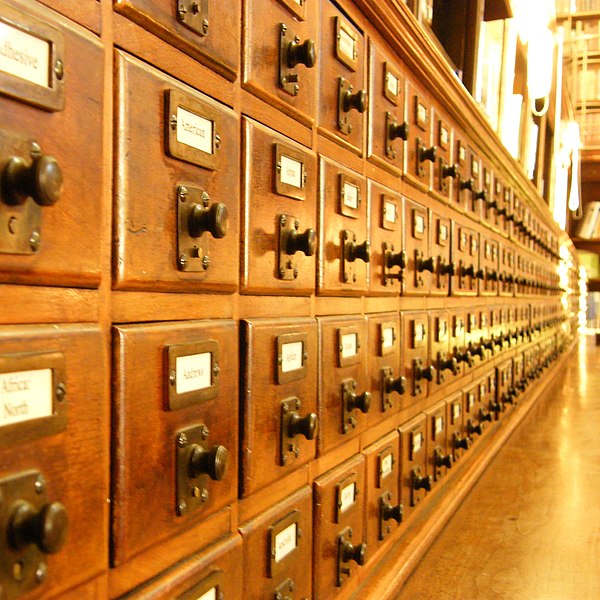
    Library card index
    Author Stuart Caie
    Source Wikipedia
    Creative Commons Licence


    On Monday 22 June 2015 I attended a reception at the British Library to celebrate the launch of a report by Adroit Economics entitled Enterprising Libraries: A blueprint for delivering economic growth in UK cities. According to Adroit Economics
    "Adroit evaluated the British Library's major business support programme which provides advice on IP and other business start-up and growth issues, serving c 2,200 start-ups."
    I have not yet been able to find a copy of the report but its highlights are summarized in an article in the British Library's Innovation and Enterprise blog on 23 June.

    Evidently the British Library were very pleased with the report for they threw quite a lavish party which included a private view of the Magna Carta: Law, Liberty, Legacy exhibition. There were speeches by Roly Keating, Chief Executive of the British Library, Darren Henley, Chief Executive of the Arts Council and Kanya King, founder and CEO of MOBO (Music of Black Origin). Unfortunately, the acoustics in the entrance hall to the British Library where the reception was held were appalling. I  could barely make out a word that any of them said. I could hear none of King's speech whatsoever because she spoke very softly even though I moved as close to the lectern as possible.

    There were also some of the great and the good of innovation at the reception:  Mandy Haberman, inventor of the Anywayup cup. Bola Olabisi founder of the Global Women Inventors and Innovators Network whom I featured in  Innovation in Africa - Bola Olabisi 5 March 2011 and the patent agent Richard Gallafent who founded Ideas 21. There were also friends and acquaintances from the Intellectual Property Office and PATLib libraries like Joyce Gray of Sheffield and Ruth Grodner of Liverpool though sadly neither Ged Doonan nor Stef Stephenson who had blazed a trail for libraries everywhere from Leeds were present. Instead, Leeds libraries were represented  by officials whom I had never met before in the decade that I have been running the Leeds Inventors Club and giving talks and dispensing free legal advice there.

    However, I made some new acquaintances in the PatLib network such as John Musham of Newcastle and a delightful pair from the magnificent Library of Birmingham  I commended the new library and the Hippodrome Theatre which I had visited two days earlier to celebrate the 25th anniversary of Sadler's Wells Royal Ballet's move to Birmingham and David Bintley's 20 years as artistic director of the company (see In Praise of Bintley 21 June 2015 Terpsichore). They were purring like kittens at the compliments to their city until I reminded them of the latest census returns which had put Greater Manchester marginally ahead of the West Midlands in the number of inhabitants (see Largest urban areas of the European Union Wikipedia) and muttered about the Northern Powerhouse. Cruel I know but as a Mancunian I am incensed by the notion that the city of Cobden, Rutherford and Turing yields to anyone. Now there is no longer even a statistical basis for the estwhile metal bashers to claim to be the UK's second city if indeed there ever was.

    I should say a few words about the Enterprising Libraries programme. This is a joint venture between the British Library and the Department for Communities funded by the Arts Council England to develop local libraries into community hubs for local economic growth. I have written extensively about this programme in this and my other blogs over the last few years and you will find links to my articles in PatLib Libraries in the UK 25 Jan 2015. To a very large extent this initiative compensates for the closure of the Business Link network  by the Coalition government. The first phase was to develop Birmingham, Leeds, Liverpool, Manchester, Newcastle and Sheffield libraries into local Business and IP Centres in partnership with the British Library (see the National Network page of the British Library's website). The Arts Council has just announced that 10 other library authorities in England have been awarded a share of a £450,000 grant to develop business and IP reference services (see the Successful applicants page of the Arts Council's website). Pilot schemes to develop Exeter and Northampton Central Libraries into Business and IP Centres.

    With 10 years experience of working with libraries in the North to holding clinics, running inventors clubs and speaking on intellectual property I see the value of this initiative and will support it in any way I can. Should anyone wish to discuss this they should call me on 020 7404 5252 during normal office house or contact me through this form.

    29 January 2015

    PatLib Libraries in the UK

    Manchester Central Library
    Author habiloid  Licence CC BY-SA 2.0  Source Wikipedia Commons


    Yesterday, the Intellectual Property Office published an updated guide to PatLib (patent library) centres in the United Kingdom. These libraries are part of a European network of over 320 patent information centres that provide information on patents and other intellectual property rights to the public.

    There are now 15 PatLib libraries in this country, the latest being Hull and Northamptonshire Central Libraries. The others are at Aberdeen, Belfast, Birmingham, Glasgow, Leeds, Liverpool. Llandudno Junction, London. Manchester, Newcastle upon Tyne, Plymouth, Portsmouth and Sheffield.

    As well as offering access to Espacenet and other on-line databases, many libraries offer other services such as searches, patent clinics, watch services, workshops and seminars and inventors clubs. The services offered by each British library are listed in the guide.

    The Birmingham, Leeds, Liverpool, Manchester, Newcastle and Sheffield central libraries are linked to the British Library in a national network of Business and IP Centres. This network is sponsored by the Arts Council of England, the Department for Communities and Local Government and the Intellectual Property Office. Last week I attended the opening of Sheffield Business and IP Centre and wrote about it in Sheffield Business and IP Centre Launch 24 Jan 2015 IP Yorkshire.

    Inventors, entrepreneurs, business owners and others who are not close to a Business and IP Centre or a PatLib library can nevertheless benefit by subscribing to the British Library's Business and IP newsletter and joining its Linkedin and Facebook groups.

    Further Reading

    29 Jan 2015 Northamptonshire Central Library joins the PatLib Network IP East Midlands
    24 Jan 2015 Sheffield Business and IP Centre Launch IP Yorks
    17 Jan 2014 Alternatives to Invention Promotion Companies
    2 Jan 2015  Putting IP at the Heart of Your Business Plan   4-5 IP
    2 Sept 2014 Sheffield Inventors Welcome Joyce Gray  IP Yorks
    15 Aug 2014 Sheffield Business and IP Centre IP East Midlands
    18 Oct 2013 Where to get free basic Information on Intellectual Property IP South East
    14 Oct 2013 Business and IP Centre National Network IP Yorks
    21 July 2013  Finding the Right IP Advice IP North West
    10 July 2013 Practising the Dark Arts in Leeds and Sheffield - roll up to be enlightened IP Yorks
    6 Mar 2013 Enterprise and Libraries: a New National Network of Business & IP Support
    5 Oct 2012 Organizations that Inventors in Manchester should know about IP North West
    21 Jan 2012 BIPC Newcastle
    15 Aug 2011 Inventors Resources in Northern Ireland
    2 Apr 2011 Resources for Inventors in South East England
    21 Mar 2011 Business Support Update
    23 Jan 2011 Resources for Inventors in Yorkshire and the Humber
    5 Dec 2010 Resources for Inventors in North West England
    26 Oct 2010 Resources for Inventors in North East England
    21 Oct 2010 Local Enterprise Partnerships begin to take Shape
    2 Mar 2006 Liverpool Inventors Club
    15 Jan 2006 New Leeds PatLib Library Website

    12 January 2015

    Alternatives to Invention Promotion Companies


    The other day I was asked for my opinion on an invention promotion company. It was not one that I had ever dealt with so I could not answer the enquiry directly but I referred the inventor to the advice that the US Patent and Trademark Office and our own Intellectual Property Office had given on invention promotion companies generally. 

    The inventor thanked me for my reply and added:
    "My family and friends have given me very positive feedback on my invention but how else do I check if my invention is good ?
    What should I do next ?
    Where can I find trustworthy contacts ?"
    I replied:
    "First do some market research. You can get some help with that at the Business and IP Centre of the British Library.
    Next you should decide whether to exploit your invention directly by setting up in business to produce and sell it or licensing it out to someone else.
    If you decide to license it out you will need to show your licensee how it will make money from the invention which means that you have to do much the same work as you would if you were making and selling it yourself. If you do get it out you will get a licence fee which will typically be a small percentage of the sale price.
    I can advise you on the legal issues but not on the financial ones.
    I wish you all the best with your invention."
    The British Library and its associated libraries in Birmingham, Leeds, Liverpool, Manchester, Newcastle and Sheffield have massive resources on market research, business planning and everything else an inventor would need to know to set up in business. If he or she is not clear how to use those resources there are courses from the library staff and its partners.

    I also advise the inventor to join an inventors' club if one is nearby. There he or she will meet product development consultants, patent attorneys, business advisers and other professionals who assist individual inventors and, most importantly, other inventors who can share their experience with him or her. I have listed some of the inventors clubs that I know about in the side panel to this blog. The Wessex Round Table of Inventors has a much longer list. I am sure that there will be lots of trustworthy and knowledgeable contacts at any of those associations.

    In my email I made clear that I am a lawyer and not a business adviser. Here are some of the things I can do for inventors.

    1. Tailoring a non-disclosure agreement to the inventor's needs or reviewing or advising the inventor on somebody else's.
    2. Advising the inventor on the optimum intellectual property protection for his or her invention and if that includes patents helping him or her find and instruct patent attorneys in this country and abroad who can apply for them.  As I do not prosecute patent, design or trade mark applications I have no interest in selling the inventor a service though I must stress that every patent attorney I know would try to advise objectively too.
    3. Representing the inventor at a hearing in the Intellectual Property Office if the examiner challenges his or her application.
    4, Helping the inventor negotiate and draft agreements with collaborators, investors and consultants.
    5. Drawing up terms and conditions, manufacturing and distribution agreements if the inventor wishes to make and sell the invention him or herself or licences if he or she doesn't and just about any other agreement the inventor may need.
    6. Helping to keep the inventor out of trouble with third parties and resolving difficulties if any arise.

    There was a time when barristers could be approached only through solicitors or patent or trade mark attorneys but that rule changed over 10 years ago, Now we can do more or less anything that a solicitor can do and as we don't have offices to maintain our services are often cheaper. You can find out more about instructing us in IP Services from Barristers 6 Apr 2013.

    Should anyone wish to discuss this article, invention promotion companies or help to inventors in general they should contact me through my message form or call me on 020 7404 5252 during office hours.

    24 December 2013

    GrowthAccelerator: the Next Best Thing to Business Link


    Until November 2011 there was an integrated business advisory service known as Business Link. It maintained a comprehensive website and a network of local business advisers who advised and assisted up to 10,000 businesses a week between them. Those services were generally of very high quality and were free at the point of use.  Funding for those services was provided by the regional development agencies. When those agencies closed in 2011 the local Business Link network closed with them. The Business Link website survived a little longer but is now absorbed into the gov.uk.

    Whether or not the end of Business Link was good bad, there can be no doubt that the service is missed. In the United States the Small Business Administration provides a service that looks very much like that used to be provided by Business Link and the devolved administrations in Scotland, Wales and Northern Ireland have maintain comprehensive business advice websites. In England there is a range of successor services such as the British Library's Business and IP Centre and its partners in Birmingham, Leeds, Liverpool, Manchester. Newcastle and Sheffield (see "Enterprise and Libraries: a New National Network of Business & IP Support" 6 March 2013) and the mentorsme.co.uk (see "'Oh Me. Oh My. I hope the Little Mentor Comes By' - The Banks New Mentoring Network" 22 July 2011).

    Possibly the service that comes closest to Business Link is the GrowthAccelerator which I learned about at a presentation after the The Sci-Tech Daresbury Business Breakfast Networking Event on the 22 Nov 2013. GrowthAccelerator describes itself as
    "a unique service led by some of the country's most successful growth specialists where you’ll find new connections, new routes to investment and the new ideas and strategy you’ll need for your business to achieve its full potential."
    It is a partnership  between Grant Thornton, PERA, Oxford Innovation and The Winning Pitch which claims to have helped over 10,000 businesses since its launch in 2012. It operates by identifying priorities for growth, developing a growth plan and providing coaches to help with the execution of the plan. It provides those services for a fixed fee.

    I chatted with several of the presenters after the talk at Daresbury and mentioned the similarity to Business Link. I was not surprised to learn that several of them had been Business Link advisers.  Like Business Link the GrowthAccelerator signposts businesses to other services and opens doors. It holds clinics, seminars and other events on all sorts of topics such as accessing finance and marketing. Business owners who want to learn more can request a free consultation through the company's website.

    If you want to discuss this article or any other related topic give me a call during business hours on 020 7404 5252 or fill out my contact form. You can also reach me on Facebook, G+, Linkedin, twitter and Xing, Merry Christmas.

    06 March 2013

    Enterprise and Libraries: a New National Network of Business & IP Support


    The Business and IP Centre of the British Library has offered advice and information to entrepreneurs and inventors in London and Home Counties since 2006. In addition to the publications and databases that would be expected of a library, the Centre offers business planning, intellectual property, market research and networking services which it delivers through clinics, seminars, workshops and on-line.   On-line services include the Centre's newsletter and the British Library UK Entrepreneur Network on Linkedin. Some of those services are offered by British Library staff and others by the Centre's partners.   

    In my article "Local Enterprise Partnerships begin to take Shape" 21 Oct 2010 I wrote:
    "One of the first casualties of the abolition of the RDAs are likely to be local and regional Business Link services. In an interview with Jason Hesse on the Real Business website, Mark Prisk, the Business Minister, announced:
    'We’re going to wind down the Regional Development Agencies, and as part of those, we’ll be winding down the regional Business Link contracts.'  
    These will be replaced by a state funded on-line service - presumably the existing Business Link website possibly under the Solutions for Business brand - and greater use of existing service providers such as chambers of commerce and local authorities. The proposal for a new business information service to be provided by thee British Library, NESTA, Newcastle City Council and Northumbria University is probably something like the model Mr. Prisk had in mind (see "Mark Prisk announces new business advisory service" on theReal Business website)."
    The Business and IP Centre for Newcastle was subsequently launched and I blogged about it in "BIPC Newcastle"  on 21 Jan 2012.

    In “Digital Opportunity A Review of Intellectual Property and Growth” Prof. Hargreaves recommended:
    "9.     Small firm access to IP advice. The IPO should draw up plans to improve accessibility of the IP system to smaller companies who will benefit from it. This should involve access to lower cost providers of integrated IP legal and commercial advice."
    The IPO drew up those plans in From ideas to growth: Helping SMEs get value from their intellectual property which I blogged in "IPO's Plan to support SME" on 31 May 2012.   One of the IPO's suggestions was "extending the model used at the Business and IP Centre in London to six regional patent libraries."

    By a press release dated 19 Nov 2013 the British Library announced that it had signed an agreement with the Intellectual Property Office and six major UK city libraries  to establish a national network of services for small businesses and entrepreneurs across the country, modelled on the services offered by the British Library’s Business & IP Centre.  The six participating libraries are Birmingham, Leeds, Liverpool, Manchester, Newcastle and Sheffield City Libraries four of which host inventors groups that I have helped to set up.

    On 11 Feb 2013 Penny Mordaunt MP sponsored a reception at Portcullis House to launch this network to be known as Enterprise and Libraries: A new national network of business & IP support.  The event included speeches from staff of the British Library, entrepreneurs who had used the Centre and representatives of local libraries. I was unable to attend the meeting but I am glad to say that I was represented by Jason McCartney, my Member of Parliament, and by Ian Wishart a patent agent who is also a director of Cobra Special Risks Ltd.

    Over the last few years I have worked very closely with Chris Brown in Manchester, Ged Doonan and Stef Stephenson in Leeds, Ruth Grodner in Liverpool and Nicola Avella of Sheffield to support entrepreneurs and inventors in those cities.   Now that I am practising primarily from 4-5 Gray's Inn Square (see "Moving to London" NIPC website 5 March 2013) I hope to make a similar contribution to the Business and IP Centre in London.   If you want to want to discuss this article, call me on +44 020 7404 5252 or send me an an email through my contact page. You can also follow me on Facebook, Linkedin, twitter or Xing,

    21 January 2012

    BIPC Newcastle

    Newcastle City Library
    Author UserUltra7  Licence Public Domain  Source Wikipedia Commons


    Jane Lambert

    On 26 Oct 2010, I blogged an announcement by Mark Preece MP of a new collaboration between the British Library, NESTA, Newcastle City Library and Northumbria University for a new Business and IP Centre in Newcastle along the lines of the British Library's Business and IP Centre in London (see Jane Lambert "Resources for Inventors in North East England"). I am pleased to say that the Centre is now open at Newcastle City Library, and it has a website and Twitter feed.

    The home page of the website claims to be the "only dedicated Business and Intellectual Property Centre outside London". Leeds Business and Patents would be entitled to argue with that. Like Leeds, the BIPC sets out to be  "a comprehensive one-stop-shop for the region’s business talent, offering everything from research materials to subscription database access; tailored 1:1 consultation sessions to the latest business journals."

    The BIPC's resources include:
    • A wide selection of business reference and lending books.
    • Free factsheets and guides (including Trade Marks, Design, Copyright, Esp@cenet, Historical Patents Searching, Patent Information and IP protection)
    • Current and backdated newspapers and journals including Management Today, Investors Chronicle, Trade International, Moneyfacts, Marketing, People Management and Contrax Weekly.
    • A dedicated seating/study/networking area for business use.
    • Display cabinets exhibiting successful case studies and historical patents journals.
    • 2 x Apple Macs and 1 PC dedicated to business use.
    • Business database subscriptions including Keynote, Cobra, Corporate Researcher and Which?
    • A private interview room with PC/internet access.
    • Interactive ‘Skills Swap’ networking board.
    Resources available in the wider library include a 100-seat café with a terrace area, printing, photocopying, scanning and faxing facilities and free internet and Wi-Fi.   All good stuff.

    The enterprise is a joint venture between the City and British Libraries, Newcastle Science City, Northumbria University, the Bdaily business network, some local solicitors and the Newcastle branch of a firm of patent and trade mark agents. Advertised services include assistance with business planning, patent, trade mark and design searches and skill training.  BIPC has an interesting programme of events starting with business coaching and a talk by Trevor Baylis on 24 Jan 2012. It plans to develop a range of services on the London model.

    One thing that they do seem to lack in Newcastle is an inventors group like the ones in Leeds, Liverpool, Manchester and Sheffield.   When I published my article in 2010, I received a number of enquiries and offers of help from inventors in the North East.  Our chambers would be very glad to help set up such a group in Newcastle if anyone would care to contact us on 0191 580 8090 or through our form.

    The Library is open until 20:30 on Monday to Thursday.   It shuts at 17:30 on Friday and Saturday and 17:00 on Sunday.   Its address is 33 New Bridge St West, Newcastle upon Tyne, NE1 8AX.