Showing posts with label criteria. Show all posts

13 October 2017

"What can we do to encourage innovators to do more collaboration and commercialisation, to stimulate knowledge exchange and promote follow-on innovation?" Answers on an Email to the IPO by 15 Nov 2017


Jane Lambert

On 23 Jan 2017, the Department for Business, Energy & Industrial Strategy ("DBEIS") published its green paper Building Our Industrial Strategy which I discussed in  "Harnessing the Potential of the UK's Home Grown Inventors" - The Government's Proposed Industrial Strategy 24 Jan 2017. In that article, I summarized that green paper as follows:
"Very briefly the green paper suggests ways in which the UK could improve productivity and spread prosperity more evenly across the country and throughout society. After stating those aims it suggests 10 policies that it calls "pillars" to achieve them. One of those pillars is "Investing in science, research and innovation" to "become a more innovative economy and do more to commercialise our world leading science base to drive growth across the UK." The document mentions some of the steps that the government is already taking and then lists some new commitments on page 34."
One of the government's new commitments was "reviewing how to maximise the incentives created by the Intellectual Property system to stimulate collaborative innovation and licensing opportunities – including considering the opening up of registries to facilitate licensing deals and business-to-business model agreements to support collaboration."

On 11 Oct 2017, the Intellectual Property Office published a consultation document entitled Industrial Strategy: Intellectual Property Call for Views. It began with the question:
"What can we do to encourage innovators to do more collaboration and commercialisation, to stimulate knowledge exchange and promote follow-on innovation?"
It explained that the government wants to find ways to stimulate collaborative innovation and increase licensing opportunities for IP rights. The purpose of the call is not to initiate a wholesale review of the IP legislative system, but to look for targeted, nonregulatory interventions that the IPO could make, which would maximize the incentives provided by our IP system.  The government wonders whether there are new products or services that the IPO could offer which would encourage more collaboration, more creation and exploitation of IP.

The ideas that the government seeks should meet the following criteria:
  1. Targeted intervention to either process or policy 
  2. Within the remit of intellectual property 
  3. Backed by evidence of the market failure or commercial potential.
Evidence can come in the form of narratives of respondents; experiences, case studies, published analysis or empirical data. Respondents are asked to state:
  • Whether they are you responding as an individual, business, intermediary, representative body; 
  • What their business does and in what sectors it operates;
  • The size of business, and what proportion of its assets is IP-based;
  • In what UK regions respondents operate;
  • In what international territories do they operate;
  • Whether there is more the IPO could do to help UK companies to operate overseas; 
  • What they spend on IP;
  • Which aspects of the IP system do they use;
  • What they particularly value about the UK’s IP system; and
  • Whether they face barriers when using the UK IP system.
Responses should be emailed to  industrialstrategy@ipo.gov.uk by 15 Nov 2017.

Suggestions that the IPO has already received include establishing IP trading platforms, publishing model B2B licence agreements, establishing a voluntary IP register, promoting the use of IP as collateral, facilitating licensing of standard-essential patents and royalty free licences and standardizing IP valuation methods.

Should anyone wish to discuss this article, call me on 020 7404 5252 during office hours or send me a message through my contact form.

01 July 2017

European Inventor Awards 2017


Standard YouTube Licence

Jane Lambert

Every year the European Patent Office recognizes outstanding inventors from around the world who have made exceptional contributions to social development, technological progress and economic growth with the European Inventors Awards.

Nominations are sought in the following categories:
  • Industry: for outstanding and successful technologies patented by large European companies
  • Research: for pioneering inventors working at universities or research institutes
  • SMEs: for exceptional inventions at small-to-medium-sized enterprises (SMEs)
  • Non-European countries: for all inventors who are not European nationals but have been granted a European patent
  • Lifetime achievement: honouring the long-term contribution of an individual European inventor.
The most recent award ceremony took place in Venice on 15 June 2017 and this year's winners were 
The above film shows the presentations. The winners were chosen from 15 finalists one of whom was Steve Lindsey from the UK who invented an energy-saving rotary air compressor.

Nominations are open for next year's awards. Anybody can propose any inventor including him or herself (see the Nominations page on the EPO's website).

Anybody who wishes to discuss this article or the legal protection and commercialization of innovation generally should call me on +44 (0)20 7404 5252 during office hours or send me a message through my contact form.
02 June 2011

Tarzanned! RGF Roadshow York 1 June 2011

On paper the regional growth fund ("RGF") looks like a good idea. Recognizing that cuts in public spending are likely to cause considerable distress in certain parts of the country, the Department for Business, Innovation and Skills ("BIS") has allocated £1.4 billion to support projects and programmes that lever private sector investment to create economic growth and sustainable employment. BIS aims particularly to help those areas and communities currently dependent on the public sector.

About £450,000 of that money has already been allocated in a bidding round that began on 28 Oct 2010 and ended on 21 Jan 2011. According to the summary of first round bids the fund received 464 bids for £2.76 billion of which 299 were for amounts of £1 to 5 million. A list of winners and the number of jobs that the fund has created or saved appears on the RGF Round 1 Analysis page of the BIS website.

The remaining £950,000 is now up for grabs in a bidding process that will close on at 12:00 on 1 July 2011. Bids for tranches of £1 million or more are invited from private bodies and public private partnerships anywhere in England from any sector of the economy. However, since the aim is to create sustainable private sector jobs bids will not be entertained from local authorities or other public sector bodies without private sector partners. Each bid that meets the funding criteria will be judged against every other bid by a ministerial panel consisting of Nick Clegg. Vince Cable, Danny Alexander and a few Tories who act on the advice of a panel of the great and the good chaired by Lord Heseltine.

Detailed guidance to applicants is set out in Regional Growth Fund: Round 2 Information for Applicants and this is supplemented by a whole slew of Frequently Asked Questions and a blog by Sir Ian Wrigglesworth, deputy chairman of the advisory panel and some other worthies including Uncle Vince himself who has written about Learning for Life without the slightest hint of irony. As I learned on Wednesday that not everybody bidding for taxpayers' money actually reads or understands this guidance, BIS has arranged a series of roadshows around the country to spell out the criteria and to introduce bods who have already interest in these handouts to the officials who will actually dole them out.

I caught up with the roadshow at York which was held in the Ron Cooke Hub of York University on 1 June. Anyone clicking the last link will see the words "Room to Engage, Inspire and Innovate" on the building's web page, but situated as it was on the banks of what appeared to be a gravel pit in a landscape of near lunar desolation they were not the first words that came to my mind. Nevertheless, I was warmed up by a cup of tea and a low calorie KitKat generously provided by the University before the session began.

The roadshow was opened by Prof. Brian Cantor, Principal of the University, who said that York was doing very nicely as it was thank you, surviving the economic downturn better than anywhere outside London and the South East. "So well, in fact", remarked Lord Heseltine, "that we might just as well pack it in and go back right now". After a nervous titter from the audience, his lordship remembered that there were probably folk from places less favoured than Henley (or even Honley) such as Donnie, Pontie and Wakie not to mention great swathes of Bradford and Sheffield, and got on with his speech.

I had previously met Lord Heseltine (then known as Goldilocks or Tarzan) in my Tory days during the 1983 election campaign when he was Minister of Defence I was a ward chair in Ilford South. I drove him in our candidate's campaign minibus around the streets of that suburb as he harangued bemused Pakistani housewives queuing for rice and lentils on the virtues of Trident and the cruise missiles that the US government were stationing at Greenham Common and Molesworth. As I negotiated a very narrow opening between two badly parked cars one of the local supporters quipped "You'll have a lot less trouble winning this election, mate". And so it turned out as Labour was clobbered not only in Ilford but also in the rest of the country.

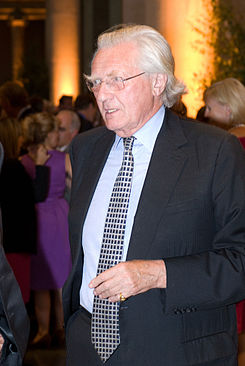
"What a difference 28 years makes," I thought. Not only was Goldilocks no longer golden - though he still had a shock of grey hair - but he lost his place in his speech blaming the hapless typist for typing it on both sides of the paper. However, it did contain some substance. Most of what he said can be found in the guidance to which I have just referred above but he did make three important points that I think are worth stressing. First, he emphasized the importance of gearing - that is to say leveraging lolly from the private sector. In the first round an average of £5 had been raised for every £1 from the fund. Secondly, RGF funding is not to be compared with the sort of subventions that used to be available through the regional development agencies. There's a finite pot of money available for distribution to where it is most needed. "After it's gone it's gone" Goldilocks said to a questioner who asked whether there would be a third round. And finally a pot of £150 million has been set aside specifically for bids from small and medium enterprises ("SME").

There then followed questions and answers which I opened (well someone had to). "Hasn't the process of running down the RDAs and Business Link, which business people and their professional advisers are used to, and replacing it with a RGF where bidding started in October and will finish in June been far too quick?" I asked. "Won't that affect the quality of the bids in that well thought out projects that require research and thorough preparation will fail to meet the deadline?" Bristling at the question he entered "Me Tarzan You Jane" mode. "How many people here are making bids?" A forest of hands erupted. "Well there's your answer" he said as he proceeded to the next question. "Well no it isn't" I would have responded had I been allowed to do so. "What's missing are the really useful projects that could make much better use of taxpayers' money if they only had more time." The number of jobs saved throughout the country on the list of winners website does not seem all that impressive a use of £450 million to me.

Someone else asked about a coaching project. "Never heard of it" retorted Goldilocks. "You can't get money for coaching though you might get money for factory where you have to coach your staff." Someone from Leeds asked how a bidder can justify money for an area which contains areas of affluence as well as pockets of poverty. "One of the most difficult dilemmas of the fund" conceded Heseltine, "but one that affects London and Manchester as well." Each project will be judged on the number of jobs it saves or creates regardless of geography.

After morning coffee in the building's atrium, where I met Bill McBeth of the Textile Centre of Excellence in Huddersfield and Jay Mehta of Cobbetts, there was a technical session by a panel of four of the officials who take part in the assessment process. What struck me was just how unattractive the RGF must be for most SME. First, there is a threshold of £1 million which with leveraging means that they have to devise a project requiring funds of £5 million. Secondly, they have to meet a very tight timetable - 12 April to 1 July for the present round. Thirdly, there is no scope for negotiation of the terms as one of the panellists confirmed in answer to another of my questions. Fourthly, successful bidders have to pay an unspecified amount of money for due diligence. Finally, each offer letter will contain a clawback provision that will allow BIS to recover the grant if the project fails to deliver the promised number of jobs.

From BIS's point of view the roadshow must have been a success. There were lots of local opinion setters such as Peter Massey from the Arts Council and Philip Bartey of Sheffield LEP. However, as I made my way back towards my car on some waste ground across the windswept landscape I was much less enthusiastic about the RGF when I left than I was when I came.